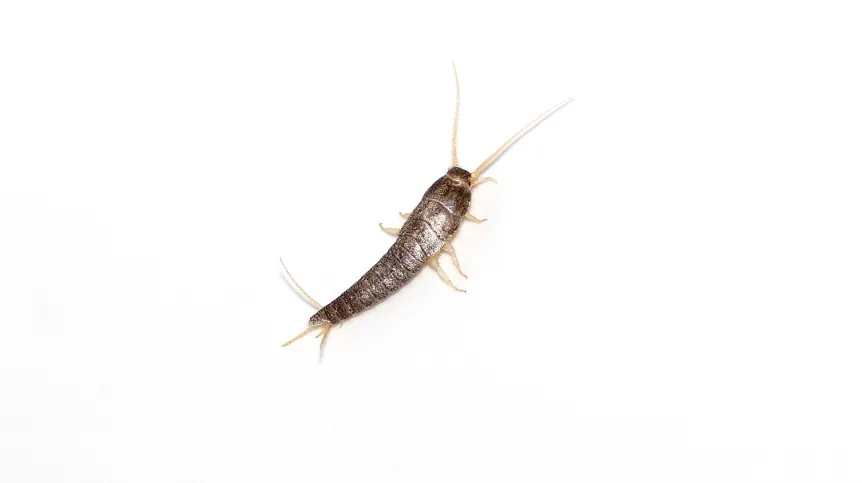
Silverfish, often regarded as nuisance household insects, belong to one of the oldest evolutionary lineages on Earth, says Professor Stanisław Ignatowicz, an entomologist from the Warsaw University of Life Sciences.
Discussing their evolution, biology, mating behaviour and ability to digest cellulose in an interview with the Polish Press Agency (PAP), Ignatowicz said silverfish predate dinosaurs, noting that despite limited fossil evidence, their body structure and morphology indicate they are among the most primitive insects.
“These are very, very old insects,” he said. He added jokingly, “their body covering is so ancient that one could say it predates the tyrannosaurs.”
Ignatowicz said silverfish are “originally wingless.”
“Some insects today also lack wings, but they lost them secondarily because they adapted to parasitism. Silverfish, however, never had them. This demonstrates their primitive nature, their evolutionary antiquity. Wings appeared later in other insects, as a valuable addition, while silverfish remained basic,” he said.
He added that the name “silverfish” reflects their appearance: “They are silver, like most fish, they have silvery scales. If you hold a silverfish in your hand, it will leave a few scales behind, this is further evidence of their archaic nature.”
Silverfish thrive in dark, moist and warm environments. “If you have a bathroom, one surface is the floor, the other is the rug. It is the perfect spa for silverfish. And it has always been this way, this environment allowed them to survive all possible cataclysms,” Ignatowicz said. In nature, they are found in leaf litter, rodent nests, under tree bark and in anthills – places “cramped, quiet, and wet.”
They also live surprisingly long for small insects. “Three or four years is a long time for such small insects. Some species can live up to eight years,” he said.
Ignatowicz described their ability to moult throughout life as remarkable. “Most insects moult until they reach adulthood. And silverfish? Male, female – they all shed their skin repeatedly. That is their defining characteristic, just as I breathe, they moult,” he said.
Although about 600 silverfish species exist worldwide, he said they are biologically distinct. Silverfish produce cellulase in their gut, enabling them to digest cellulose without bacterial assistance.
“Please note: termites rely on bacteria, while silverfish have their own enzyme factory. If they eat a piece of paper, they completely digest it,” he said. They use this enzyme to break cellulose into simple sugars. “And then burn these sweet sugars as an energy source. Quite clever,” he added.
Ignatowicz also described their mating behaviour. Males of primitive insects produce spermatophores, and in silverfish the process is elaborate. “The male deposits a ‘glass’ of sperm on the substrate, builds a silk screen – real silk! – and creates a sort of secluded garden around it. Then he looks for a female, lures her into this garden, and encourages her to insert his ‘glass’ into her genital opening,” he said.
He said this does not always work. “There were times in evolution when the female simply ate this ‘glass’, so males learned to coat it with a disgustingly bitter substance to discourage their mates from doing so,” he said.
He added that some silverfish species are composed only of females: “They have only females, no males. Females hatch from eggs, they grow up, lay eggs – and so on.”
In the most common species, however, males remain active. “The female – pardon me – often doesn't feel like it, she ‘has a headache’, so the male must personally take care of the future of the species at all times,” Ignatowicz said.
Silverfish lay dozens of eggs during their lifetime, and in moist environments development from hatchling to adult takes four to five months. After hatching, juveniles are independent, mature gradually and moult multiple times. “The parents only provide them with a good place to live and feed,” he said.
Silverfish can run at about 0.3 m/s and change direction several times per second, behaviour that helps them evade threats. “They run in a zigzag pattern, as if swimming across the floor. Hence the name silverfish,” he said, adding that the insects are very timid.
Although they do not transmit diseases or bite, Ignatowicz said their presence is often unwelcome. “I call any animal that enters my presence without my consent a pest,” he joked.
Silverfish can damage books, documents and wallpaper, and contaminate food in damp rooms. They also indicate high humidity. Ignatowicz recommended ecological methods, such as ginkgo leaves inserted between book pages, and commercial gel preparations for control.
Despite the problems they cause, he said they deserve recognition. “For me, the male silverfish is the best example of caring for the continuity of the species. And the entire group is fascinating. Old, primitive, primeval – and yet it has survived into the 21st century despite all human whims,” he said, adding that humans still have much to learn from them.
PAP - Science in Poland, Mira Suchodolska (PAP)
mir/ bar/ mhr/
tr. RL