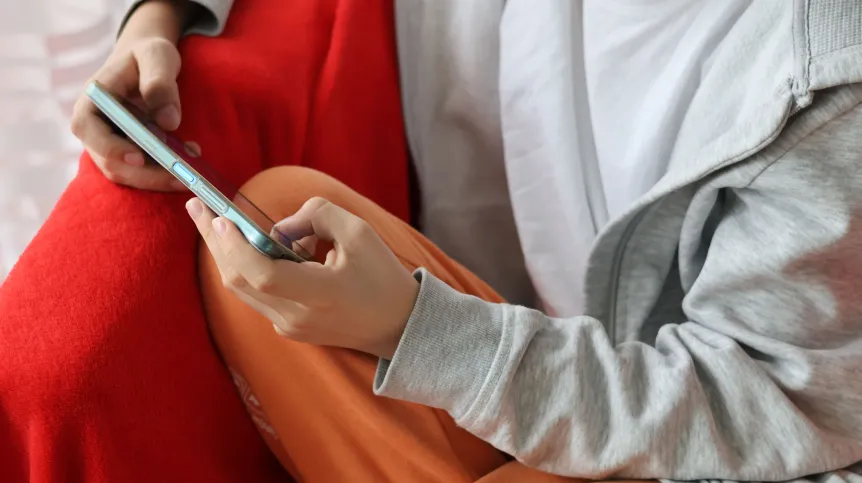
Stressed parents are more likely to give screen devices to their children, which can increase the risk of overuse, according to new research. The findings also suggest that parents’ knowledge of recommended screen time limits for preschoolers has little impact on actual practices.
The results come from the third phase of the “Toddler online” research project by psychologist Magdalena Rowicka, PhD, from Maria Grzegorzewska University, which focuses on technology use in early childhood.
The first two phases examined patterns of screen device use among preschoolers, while the third study explored why parents allow their children to use these devices.
The study involved 1,088 parents of children aged 3 to 6, including 979 mothers and 109 fathers. The sample represented 1,088 children, 568 girls (52%) and 520 boys (48%). Parents reported on their familiarity with recommendations for screen use in young children, and whether stress influenced how often they shared devices with their children.
The analysis showed that parental stress is associated with more frequent sharing of screens. “Parents, seeking ways to cope with stress, use strategies that are available, albeit maladaptive – they both immerse in the online world themselves and give their children these devices prematurely,” Rowicka said in a press release.
She added that this practice can lead to problematic use of devices by children, partly because the parent’s own needs are not being met.
Based on these results, Rowicka recommends supporting parents, “especially those whose children exhibit difficult temperaments, because these parents are at risk of experiencing high levels of stress, and lacking appropriate coping skills or strategies, they may choose maladaptive strategies.”
The psychologist emphasised that education and support should help parents cope with both their own stress and their child’s emotions.
Earlier phases of the “Toddler online” study found that roughly half of children under age 6 use mobile devices. Children typically begin using them at age 2, a threshold that has been decreasing over time.
“The use of mobile devices by children aged 0 to 6 raises concerns among researchers because this is a period of intensive development, during which mobile devices can contribute to physical and mental health disorders and potentially affect the risk of developing compulsive behaviours in the future,” Rowicka said.
Previous research by the team also found that most children have internet-connected devices, with 75% using them without supervision. Nearly two-thirds of parents reported giving a device as a reward, and many admitted using screens to stop crying, reduce complaints, or free up time for household chores.
Rowicka said the goal of the project is not only to document these trends but also to promote conscious parenting in the digital world, including through social campaigns. (PAP)
PAP - Science in Poland
akp/ agt/
tr. RL