
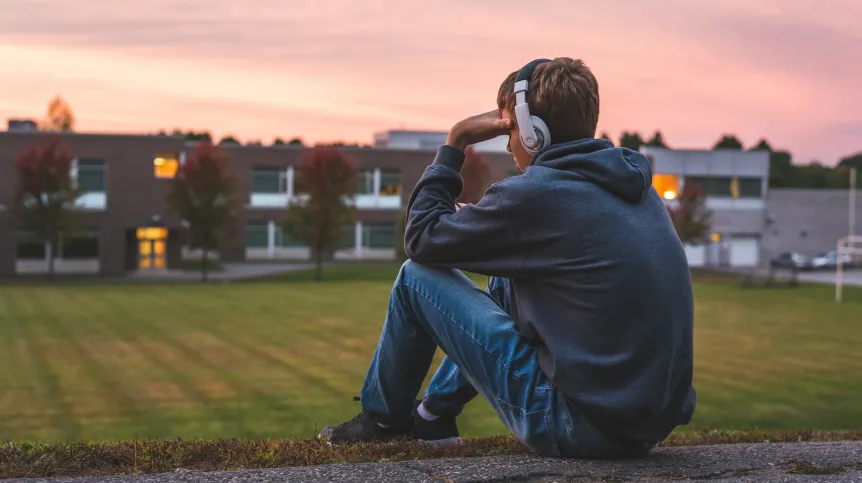
When loneliness sets in, it subtly reshapes how we see the world. People around us begin to appear colder and more hostile, even though we crave connection.
According to psychologist Aleksandra Piejka, PhD, this defensive response can trigger a self-reinforcing spiral of isolation that harms both mental and physical health. Her research shows that even short-term loneliness can distort social perception and disrupt the body’s regulatory systems.
In an interview with PAP – Science in Poland, she explains why loneliness is more than a fleeting emotional state and how it can quietly undermine well-being.

PAP – Science in Poland: Some people associate loneliness simply with the lack of a relationship, but it can also mean emotional distance from people more broadly. How do you define loneliness in your research?
Aleksandra Piejka: I understand loneliness as the subjective feeling that we have too few good and close social contacts. It does not equate to isolation; one can have a partner, family, or colleagues at work and still feel deeply lonely if these relationships do not provide a sense of understanding and closeness. On the other hand, someone who has few friends or rarely sees family but feels these contacts fully satisfy them is not lonely. This is well captured by the difference between “loneliness” (a negative emotion that is harmful) and “solitude” (being alone, which can be pleasant and beneficial for your mental well-being). Negative loneliness is a serious health risk factor.
SiP: Among young people, there is a popular trend of being a “lone wolf” or “sigma” – emphasizing independence and self-reliance. Does this carry the risk of slipping into harmful loneliness?
A.P.: It is a complex phenomenon. In my opinion (though this is a hypothesis, not the result of specific research), glorifying individuality and complete independence is often a defence mechanism. Among teenagers and (in our study) young adults aged 18–35, loneliness is the highest of all age groups. When it occurs during such an important developmental period, it has consequences for mental and social life. This is where various cultural mechanisms emerge to help young people cope with loneliness and respond to psychological difficulties.
According to Professor John Cacioppo, loneliness is an evolutionarily beneficial mechanism similar to hunger – a sharp signal from the body that we are missing something fundamental and we need to change it. However, when we are lonely, other people can pose a potential threat to us, so it is safer to be less trusting of them – from a survival perspective, it is always better to defend ourselves in advance than to be harmed later. Therefore, despite our hunger for relationships, if loneliness lasts long, we begin to perceive others as more hostile. Chronically lonely people increasingly distance themselves from others, which fuels a spiral of loneliness. Being a “sigma” may initially provide us with a sense of comfort and a safe distance, but in the long run, this distance and negative attitude toward people can also prevent us from fulfilling basic social needs. This discrepancy can result in chronic stress, which translates into real health problems.
SiP: What does “prolonged loneliness” actually mean? Is it about duration or intensity?
A.P.: We measure loneliness with a standardised questionnaire. We do not ask directly: “Do you feel lonely?” but rather examine how a person perceives their social relationships. Loneliness is not a constant feeling. It becomes prolonged only when we fall into a spiral of loneliness or are predisposed to it. Of course, there is no “loneliness gene”, although research shows that it has a partially genetic basis. However, the interaction of various tendencies (e.g., personality traits, such as introversion or neuroticism) with difficult life events can cause loneliness to become permanent.
Increased loneliness is also observed in neuroatypical individuals, for example, those on the autism spectrum, which may result from ostracism and misunderstanding from those around them. Social, environmental, family, and upbringing factors, as well as individual personal history, also contribute to this.
SiP: Has Cacioppo’s theory been confirmed? Does chronic loneliness really make us see others as more hostile?
A.P.: Our research provides evidence for the presence of such cognitive distortions. We also demonstrated that loneliness translates into impaired functioning of the parasympathetic nervous system, which is responsible for the regulation and calming necessary for social functioning.
In one of our studies, we attempted to experimentally induce feelings of loneliness – depending on the condition, participants were told that, according to the results of a personality test, they would face either a lonely future, or one full of relationships. In the lonely group, we observed that the parasympathetic nervous system did not respond adequately to the research task, which may indicate problems with proper body regulation.
Importantly, we can distinguish a momentary feeling of loneliness from a more profound state that lasts for a long time and that we no longer fully notice is present in our daily lives. Based on Cacioppo’s theory, we expected that long-term loneliness would be associated with an increased perception of others as more hostile, while short-term loneliness would be associated with a greater desire to be with them. However, it turns out that both types of loneliness are associated not only with a more negative perception of people but also of situations when no one is with us. This means that even a short-term feeling of loneliness can be associated with significant changes in both bodily functions and our perception of the world.
SiP: Can this knowledge help people cope with loneliness in practice?
A.P.: Indeed, according to our research, loneliness is linked to how we perceive ourselves and others, and not necessarily to objective deficiencies in our social skills. Simply reaching out and seeking contacts will not help, although ultimately, we must do that. However, working on how we interpret what happens to us is equally important.
So, you do not have to go to a bar and wait to meet someone there. Above all, it is best to try to change the way you think about yourself and others. This can help you connect with them.
_____________
Aleksandra Piejka, a researcher at the Institute of Psychology of the Polish Academy of Sciences and winner of the Prime Minister’s Award for Outstanding Doctoral Dissertation, studies the links between loneliness, social cognition, and physiological regulation in young adults.
PAP - Science in Poland, Karolina Duszczyk
kol/ agt/
tr. RL