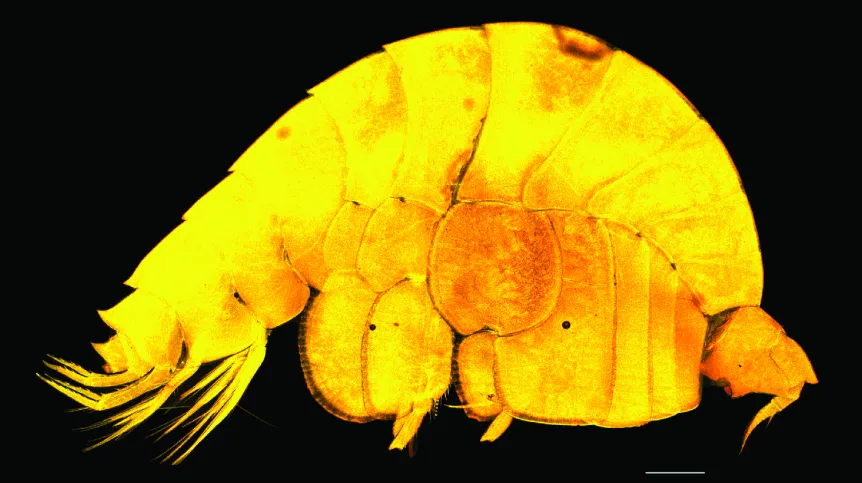
Scientists have identified 24 new species of amphipod crustaceans, including an entirely new superfamily, in the depths of the Central Pacific Ocean, one of the least explored ecosystems on Earth.
The species were found in the Clarion-Clipperton Zone, a six-million-square-kilometre region between Hawaii and Mexico.
The findings were published in a special issue of the journal ZooKeys.
The discoveries result from an international taxonomic workshop organised by Anna Jażdżewska, PhD, at the University of Lodz, in collaboration with Tammy Horton, PhD, of the National Oceanography Centre in the United Kingdom.
During a 10-day meeting at the Department of Invertebrate Zoology and Hydrobiology at the University of Lodz’s Faculty of Biology and Environmental Protection, researchers prepared descriptions of species new to science collected from the CCZ.
The species were described by researchers and students from institutions including the University of Lodz, the National Oceanography Centre, the Natural History Museum in London, the Canadian Museum of Nature, Earth Sciences New Zealand (NIWA), the University of Hamburg, the Senckenberg-Leibniz Institution for Biodiversity and Earth System Research, and the University Museum of Bergen.
“With more than 90% of species in the CCZ still unnamed, each species described is a vital step towards improving our understanding of this fascinating ecosystem. Describing the species encountered during these studies is a critical step in documenting the rich biodiversity of the CCZ, enabling us to communicate effectively about the fauna”, said Tammy Horton, PhD.
The project demonstrated the effectiveness of taxonomic workshops in accelerating species identification.
“The process was based on close collaboration and, as a result, it allowed us to achieve the ambitious goal of describing over 20 species in just one year. This is something we certainly would not have been able to do working alone. Our team's research provides crucial information that can support future decisions regarding conservation plans for the CCZ and demonstrates the importance of continuing this work”, said Anna Jażdżewska.
Researchers said that if similar efforts continue, with around 25 new species described each year, the amphipod fauna of the CCZ could be close to fully documented within a decade.
Newly described species include Byblis hortonae, Thrombasia ania and Byblisoides jazdzewskae, named in honour of the project’s co-leaders. Horton also named a species from the new superfamily, Mirabestia maisie, after her daughter.
Other species names reflect scientific references and the workshop experience. Eperopeus vermiculatus refers to the World Register of Marine Species database, while Pseudolepechinella apricity reflects what researchers described as a sense of warmth and friendship during the workshop.
“Apricity means the feeling of the warmth of the winter sun, and it is one of my favourite words. It was very apt to use during the workshop as we discussed our findings in the warmth of the February sun amid the snow of the Polish winter in Lodz. It was certainly fitting to also use it for one of our amphipod discoveries”, Horton said.
The workshop was funded by a grant from the International Seabed Authority under its One Thousand Reasons campaign, which aims to describe 1,000 new species within a decade. (PAP)
PAP - Science in Poland
ekr/ agt/
tr. RL