
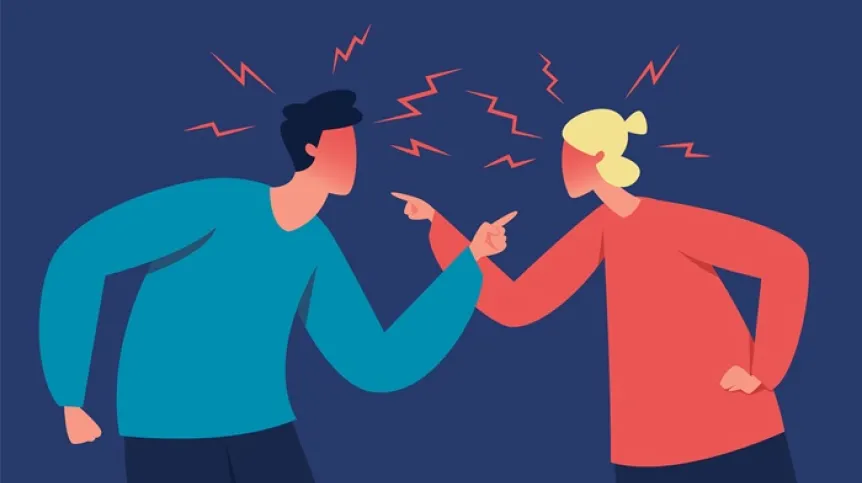
Conspiracy theories can fuel hatred and hostility between social groups while also increasing feelings of threat, fear and distrust, according to psychologists from the Institute of Psychology of the Polish Academy of Sciences.
Marta Marchlewska, PhD, a professor at the Institute of Psychology of the Polish Academy of Sciences, and Dominika Adamczyk, PhD, from its Political Cognition Laboratory, examine the psychological and social consequences of conspiracy thinking in a publication in the journal Psychological Inquiry.
Conspiracy thinking is associated with a range of negative consequences, both for individuals and society.
‘Conspiracy theories appear to explain reality, providing a sense of predictability. Thanks to them, phenomena occurring in the world cease to be a matter of chaos and chance. A conspiracy theory usually alleges that there is a powerful group of people operating in secret. Their alleged goal is to harm a segment of society, for example, our own group. Thanks to conspiracy theories, we can try to find alleged culprits, individuals or groups responsible for unpleasant, often random, situations in our lives. Sometimes, even for situations for which our own group is responsible’, Marchlewska said.
‘Sometimes we might think that conspiracy theories can be amusing, for example, when we hear that reptilians rule the world. However, when we start thinking about it in the context of various historical events, it turns out that creating and spreading such theories is one of the most effective ways of fuelling hatred and hostility between groups’, she said.
The researchers are examining, among other things, the Great Replacement Theory, which claims that indigenous Europeans are being replaced by migrants, refugees, people of colour and Muslims.
‘This is one of the theories that may reinforce aversion, hostility towards other groups, also in the Polish context. This theory attempts to explain why people who were previously not here are increasingly appearing in Poland’, Adamczyk said.
The effects of conspiracy thinking can also extend beyond hostility towards other groups.
‘Surprisingly, such content can fill a knowledge gap for a while, but ultimately, it builds a lot of negative emotions. Research by Zuzanna Molenda from our team shows that conspiracy thinking reinforces paranoid tendencies. When we become very interested in conspiracy theories, read about them, and begin to believe in them, we also begin to perceive reality differently. For example, we may be more prone to excessive suspicion. We may feel that someone is constantly out to get us and that we cannot feel safe’, Marchlewska said.
The researchers point out that people cannot independently verify the scientific or technological basis behind many decisions they encounter in everyday life. They cannot personally assess the effectiveness of an mRNA vaccine, the safety of a nuclear power plant or climate models predicting the course of global warming.
Understanding such complex issues requires trust in experts. For some people, however, building that trust can be psychologically difficult, particularly when they struggle to tolerate uncertainty and cannot independently analyse large amounts of information.
‘One such variable is the need for cognitive closure. This psychological trait causes us to quickly grasp information that fills a knowledge gap. Some people have a very poor tolerance for uncertainty and ambiguity. They even prefer a false explanation to no answer. Conspiracy theories provide them with a simple picture of the world: they know who is to blame, what the hidden motives are, and why events unfolded as they did. At the same time, the need for cognitive closure is linked to an effect called seizing and freezing. We seize and freeze a specific vision in our heads, and we are not inclined to modify it in any way later’, Marchlewska said.
The desire to appear competent and more aware than others can also play a role. Conspiracy theories can provide people with a sense that they have access to unique knowledge unavailable to those around them.
‘It is known that narcissistic traits, both at the individual level and at the group level, are associated with belief in conspiracy theories’, Marchlewska said.
The researchers emphasise, however, that people who believe in conspiracy theories are not necessarily irrational.
Susceptibility to such beliefs can be a response to real-world difficulties, including anxiety and a sense of losing control. People may also be more likely to turn to conspiracy theories when experiencing difficult emotions or stress.
Research conducted during the COVID-19 pandemic found that increased stress and anxiety, particularly when people were unable to cope with these states adaptively, were often associated with a greater tendency to believe in conspiracies.
‘Convincing someone to change their way of thinking is a huge challenge. We can try to equip the public with various ways of coping with emotional difficulties, stress, or simply a sense of psychological threat. If we actually provided people with these skills, there would be a greater chance that they would not fall into the trap of conspiracy thinking in the first place’, Adamczyk said.
The researchers also argue that changing how science is communicated could help reduce the appeal of conspiracy theories.
‘Firstly, as scientists, we should communicate better with the public. The point is not for people to blindly trust scientists just because they are scientists. This also creates room for various types of abuse’, Adamczyk said.
‘It is also not about simplifying research results at the expense of reliability, because that would certainly not be the right approach, but rather about showing the process of acquiring knowledge. If people better understand where this knowledge comes from and how we build conclusions, trust in science can increase’, she added.
According to the researchers, this is particularly important because conspiracy theories and pseudo-experts can offer seemingly simple explanations for complicated events.
People promoting conspiracy theories often use simple language and create narratives in which everything appears to fit together. Even when the information is false, the recipient may find it easier to accept than scientific explanations that acknowledge uncertainty.
‘Scientists are more cautious, often saying they need more research and discussing the limitations of the various methods they use. We often hear from researchers that much still needs to be done to understand a given issue, that there is always a margin of uncertainty. This is indeed a strength of science, but on the other hand, it is a limitation that makes our narratives less appealing than the simple ones often used by pseudo-experts. Therefore, it is equally important to make audiences aware that the simplicity and decisiveness of pseudo-experts' messages do not indicate their high competence. They often merely serve as a facade, concealing a lack of any basis for making claims about the reality around us’, Adamczyk said.
Ewelina Krajczyńska-Wujec (PAP)
ekr/ agt/
tr. RL