

Not all noise is equal: What makes some city sounds unbearable
City noise is not simply a question of how loud a sound is. Sudden impulse noises such as car doors slamming, fireworks and barking dogs can be particularly bothersome because people cannot easily get used to them, according to an environmental acoustics expert.
-
Can a joke help beat depression? Scientists urge caution
Humour can be part of depression therapy, but it must be used with great caution and tailored to the stage of treatment and the individual's current emotional and cognitive capabilities, according to an analysis by Anna Braniecka, PhD, of SWPS University.
-

Video games may help older adults fight off frailty
Interactive movement games combined with traditional exercises can improve physical fitness in older adults, with particularly promising results among those showing early signs of frailty, a study by researchers from Wroclaw Medical University has found.
-

Polish-Swiss team develops personalised nutrition system for premature babies
Polish and Swiss researchers are developing a system that could allow premature babies to receive human milk fortified to meet their individual nutritional needs.
-

Plant-based diets could strengthen One Health approach, Polish scientists say
Reducing consumption of animal products could lower the risk of chronic diseases and some infections while reducing environmental pressure and the use of antibiotics in farming, according to Polish scientists who argue that diet should play a greater role in the international One Health approach.
-
Kraków scientists find new way to identify the best eggs for IVF
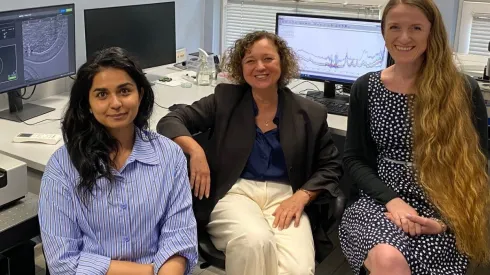
The distribution of lipid droplets inside an egg cell could reveal its chances of developing successfully, according to researchers from Kraków who have developed a non-invasive way to examine living human egg cells in three dimensions.
-

Colour-coded ECG map shows heart rhythm and heartbeat shape
Hours of ECG data can be turned into a single colour-coded map, allowing changes in heart rhythm and the shape of individual heartbeats to emerge as visible patterns. Physicists at the Warsaw University of Technology have developed the method and tested it on recordings from healthy people and patients with various heart rhythm disorders.
-

Polish scientists create first catalogue of proteins whose variants may be linked to rare diseases
The first systematic catalogue of 267 cullin–RING ligase substrate receptors, 93 of which have already been linked to genetic diseases, has been created by scientists from the International Institute of Molecular and Cell Biology (IIMCB).
-

Sleep therapy boosts Alzheimer’s patients’ cognition after just one month
A device that stimulates the vagus nerve during sleep has been shown to improve cognitive performance in Alzheimer’s patients after one month of treatment, according to research by scientists from Łódź published in the Journal of Alzheimer’s Disease.
-

University of Wrocław scientists 'program cells’ to boost efficacy of targeted cancer therapies
Scientists from the University of Wrocław have demonstrated that cancer cells can be chemically ‘programmed’ to take up drugs used in targeted therapies, potentially allowing treatment to be directed towards cancer cells rather than healthy ones.
Most Popular
-

Alien comet reveals secrets of distant star system
-
Archaeologists uncover 2.5km of hidden roads near Machu Picchu
-
Scientists find microscope beams can change chemical reactions
-
Can a joke help beat depression? Scientists urge caution
-
Hot idea: Scientists find new way to turn waste heat into more hydrogen