Adobe Stock

Polish scientists develop bone implant to treat weak bone fractures

Polish scientists have developed a bone implant that could improve treatment for patients with weak bones, by delivering drugs directly to fracture sites, project leaders say.

  • Photo from press release
    Technology

    Polish lunar excavator aces low-gravity tests in European Space Agency campaign

    Polish scientists have successfully completed tests of a prototype space excavator designed to extract lunar regolith under simulated lunar-gravity conditions.

  • Adobe Stock
    Earth

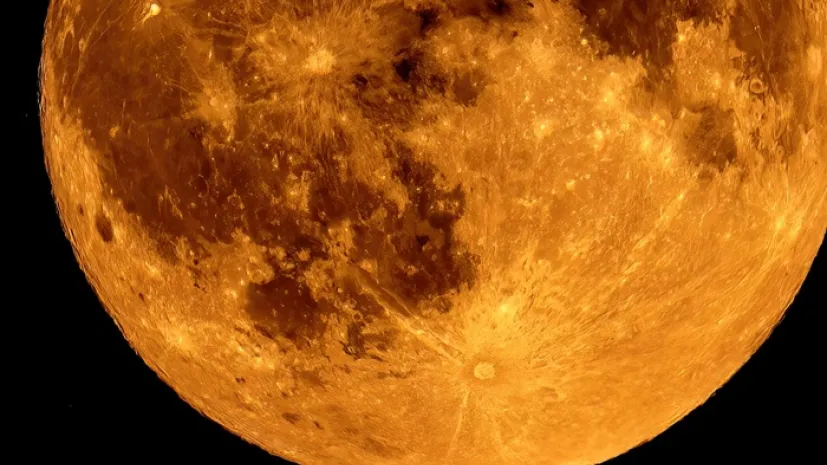
    Life without the Sun: Polish explorer describes months of darkness on Polar station where Moon is the only light

    At the Polish Polar Station Hornsund, the sun remains below the horizon for more than three months. For polar explorer Dagmara Bożek, that period changes the pace of daily life. “During the polar night, metabolism slows down, sleepiness increases, and monotony sets in,” she tells the Polish Press Agency.

  •  Adobe Stock
    Human

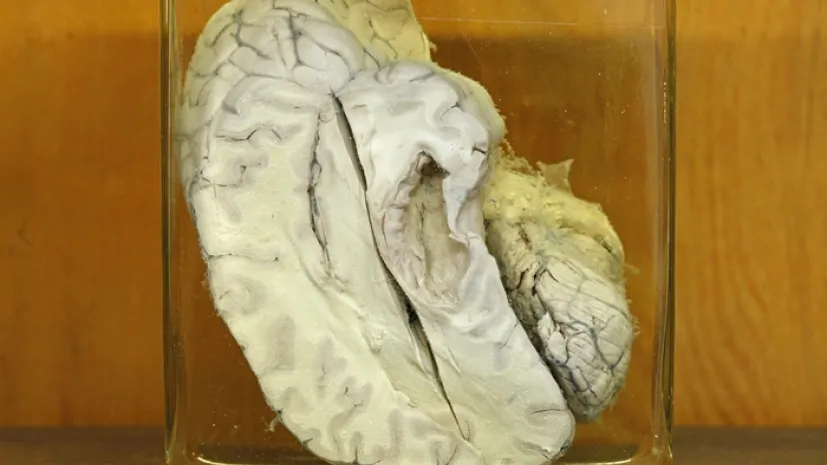
    Human intelligence peaks between 55 and 60 years of age, new study says

    General cognitive and personality-related functioning peaks between the ages of 55 and 60, according to research by psychologists from Poland and Australia who analysed cognitive abilities, personality traits, emotional intelligence, and empathy.

  • Adobe Stock
    Life

    Wolves more afraid of human voices than of barking dogs, study finds

    Wolves fear human voices more than barking dogs or bird calls, scientists say. On the Hel Peninsula, wolves have likely established the smallest known territory in Poland.

  • Adobe Stock
    Universities

    Universities told they must lead fight against scientific ‘paper mills’

    So-called scientific “paper mills” cannot be eliminated through national legislation, but universities can limit their impact through internal rules, funding restrictions and disciplinary action, says a leading legal expert in Poland.

  • Adobe Stock
    Technology

    3D-printed neurotube to help regain mobility after injury

    A 3D-printed structure that allows nerve cells to travel independently and form new connections, offering a potential advance in the repair of severed arm or leg nerves, has been developed by researchers from Poznań and collaborating centres.

  • Reconstruction of the appearance of a Jurassic turtle from Krzyżanowice, by Bogusław Waksmundzki
    Life

    Fossil turtle Shells from Jurassic Poland record ancient ecological interactions, study finds

    Scientists at the University of Warsaw have analysed unusual cavities preserved on the shells of sea turtles that lived 150 million years ago, concluding that the marks record ancient interactions with parasites, symbionts and predators.

  • Adobe Stock
    Technology

    Polish language not ‘superior’ for AI prompting, researchers say

    Claims that Polish is the “best language for prompting” AI models are incorrect, according to the research behind the OneRuler benchmark, a multilingual test suite evaluating how AI models process very long texts.

  • Adobe Stock
    Technology

    Revolutionary detector could transform thermal imaging and gas detection

    A detector that detects energy from near-infrared to thermal radiation at room temperature has been developed by Chinese researchers working with physicists from the Military University of Technology in Warsaw.

Most Popular

  • Adobe Stock

    Polish language not ‘superior’ for AI prompting, researchers say

  • Two-headed worms discovered by Polish scientists

  • Universities told they must lead fight against scientific ‘paper mills’

  • Human intelligence peaks between 55 and 60 years of age, new study says

  • 3D-printed neurotube to help regain mobility after injury

Recommended

Reconstruction of the appearance of a Jurassic turtle from Krzyżanowice, by Bogusław Waksmundzki

Fossil turtle Shells from Jurassic Poland record ancient ecological interactions, study finds

Scientists at the University of Warsaw have analysed unusual cavities preserved on the shells of sea turtles that lived 150 million years ago, concluding that the marks record ancient interactions with parasites, symbionts and predators.