-
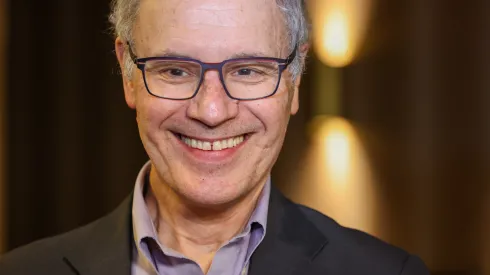
Nobel Laureate Professor Victor Ambros awarded Polish citizenship
Nobel Prize-winning scientist Victor Ambros, whose father was born in pre-war Poland, has become a Polish citizen.
-
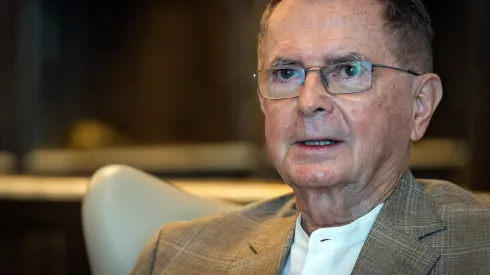
‘6,000 planets found but where is everybody?’ asks Polish astronomer who discovered the first extrasolar planet
The discovery of thousands of planets beyond our Solar System has brought humanity closer than ever to answering one of its oldest questions: are we alone in the Universe?
-
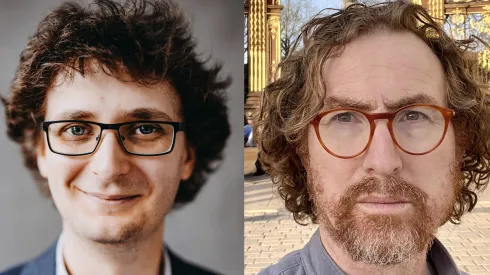
Polish and French scientists win award for groundbreaking ‘déjà vu’ research
A Polish and a French psychologist have won the 2026 Marie Skłodowska-Curie and Pierre Curie Polish-French Science Award for pioneering research that has transformed scientists' understanding of déjà vu and spontaneous memories.
-
Polish mathematician receives 2026 Balakrishnan Award for Excellence in Scientific Research
A Polish mathematician has won the distinguished 2026 Balakrishnan Award for Excellence in Scientific Research from the Viterbi School of Engineering at the University of Southern California
-
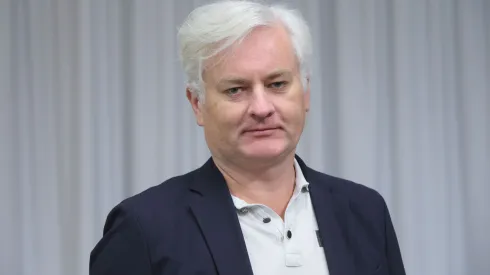
Poland's Professor Piotr Sankowski joins UN global panel on AI
Professor Piotr Sankowski, director of the IDEAS Research Institute, has been selected to join a global scientific panel on artificial intelligence established by the United Nations, the institute announced.
-

Asteroid named after Polish astronomer
Another asteroid has joined the list of “Polish” objects in space, now officially named Wolszczan after Polish astronomer Aleksander Wolszczan, who discovered the first extrasolar planets.
-
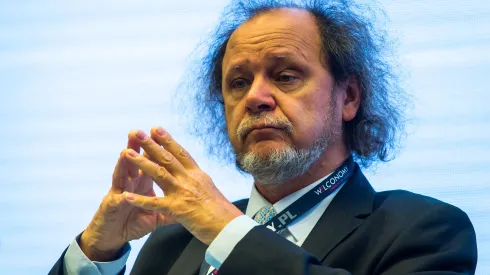
Nicolaus Copernicus University professor elected to World Academy for Artificial Consciousness
Professor Włodzisław Duch of Nicolaus Copernicus University has been elected to the World Academy for Artificial Consciousness (WAAC), an international organization bringing together leading researchers in artificial intelligence and cognitive science. For his contributions to AI research, he has been awarded the title of Academician, the university announced.
-

Polish scientists wins Ig Nobel Prize for study on intelligence and narcissism
Professor Marcin Zajenkowski from the University of Warsaw has received the Ig Nobel Prize in Psychology for research showing that praising someone for their intelligence can temporarily increase narcissism.
-

Polish physicist honoured with prestigious Japanese award
Professor Tomasz Dietl, a leading physicist with the Institute of Physics of the Polish Academy of Sciences, has been awarded the prestigious Tohoku University International Award – Special Award.
Most Popular
-

Polish archaeologists uncover ‘lavish home of Roman legion commander’
-
Nightingale songs may tell mice when it’s safe to feed
-
People who struggle with uncertainty choose like-minded friends
-
Brain model reveals how neural chaos is kept under control
-
Nanoplastics trigger stress in human immune cells within an hour