

Over 60% of city drivers in these Polish cities say they cannot imagine life without cars
More than 60% of car users in Poznań and the Tricity area say they would find it difficult to give up their vehicles, according to the report What Moves Us, published on Friday, as Poland records one of the highest motorization rates in Europe.
-
Childhood experiences change the way we help family and strangers, study finds
People who experienced adversity in childhood are more likely to help strangers but less likely to support close family members, while trust in others in adulthood is primarily shaped by positive early experiences, according to a study by researchers from the University of Warsaw.
-

Online drug trade shifts to messaging apps, exposing prevention gaps, Polish study finds
Drug trafficking is increasingly moving to instant messaging platforms and online environments, creating new risks that current addiction prevention strategies fail to address, according to research led by Piotr Siuda of Kazimierz Wielki University.
-
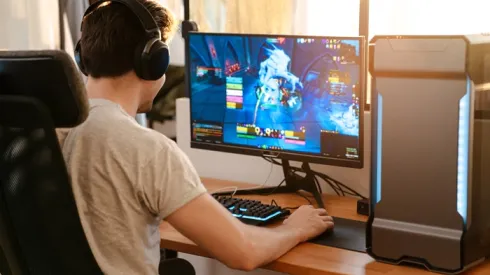
Post-game depression: New study reveals emotional toll of finishing video games
Post-game depression (P-GD) is a type of grief resembling parting with a loved one or the end of an important life stage, and fans of role-playing games are most susceptible, according to researchers who developed the first tool to measure this phenomenon.
-

Russian disinformation aims to destroy trust in the state, says Polish academic
Russian disinformation campaigns are designed to weaken societies by destroying public trust in their own states and institutions, according to a researcher from the University of Warmia and Mazury in Olsztyn.
-

Body fat influences voice pitch and loudness, Polish study shows
Body fat affects the human voice, making women’s voices louder and giving men’s voices a “brighter” tone, according to research by Polish anthropologist Łukasz Pawelec, PhD, of the Wrocław University of Environmental and Life Sciences.
-
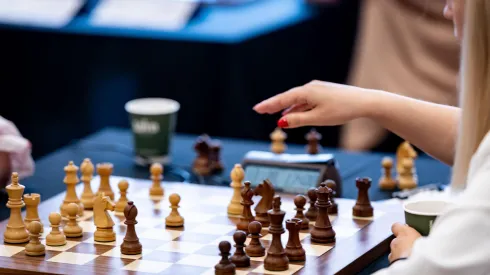
Playing chess can improve self-awareness and life skills, study shows
Playing chess can help develop self-awareness and even change life patterns, research focused on how female students applied lessons from chess to understanding their own behaviours has shown.
-
Russia uses disinformation to target Eastern Europe, Poland at risk, expert warns
Russia is waging a “new Cold War” in the information space, using disinformation to influence public opinion in Eastern Europe and potentially target Poland, a leading expert at Poland’s University of Warmia and Mazury in Olsztyn said.
-

Children score higher on grammar tests in face-to-face settings than online, researchers find
Children performing grammar tests achieve higher average scores when assessed face-to-face than when tested online, according to analyses by the Language and Humour Research Team at the Institute of Psychology of the Maria Grzegorzewska University in Warsaw.
-

Consumer culture pushes teenagers toward materialism and worsens mental health, psychologist warns
Teenagers are growing up in a consumer culture that promotes material success as the main path to happiness, which may harm their well-being, says psychologist Anna Maria Zawadzka from University of Gdańsk.
Most Popular
Recommended

Scientists grow lab-made blood vessels offering alternative to animal testing
Scientists have developed a method to control the formation of blood vessel networks using magnetic fields, enabling the creation of vascularised human tissue models for drug testing and potentially reducing reliance on animal experiments.