
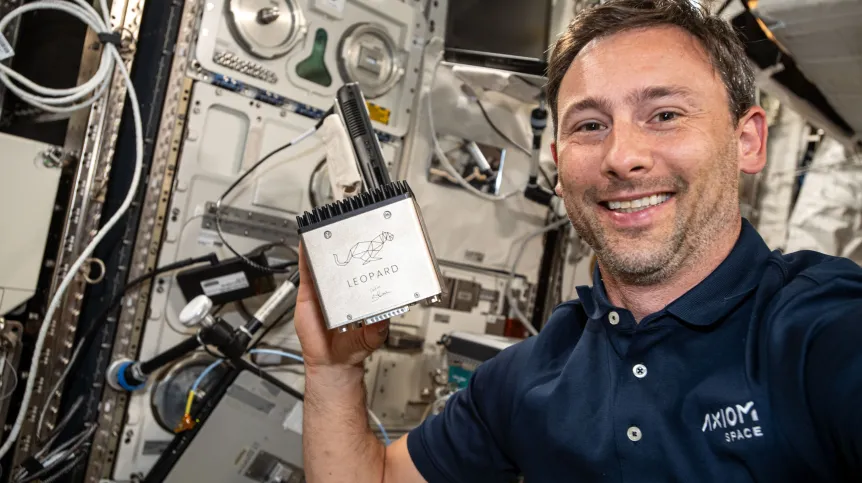
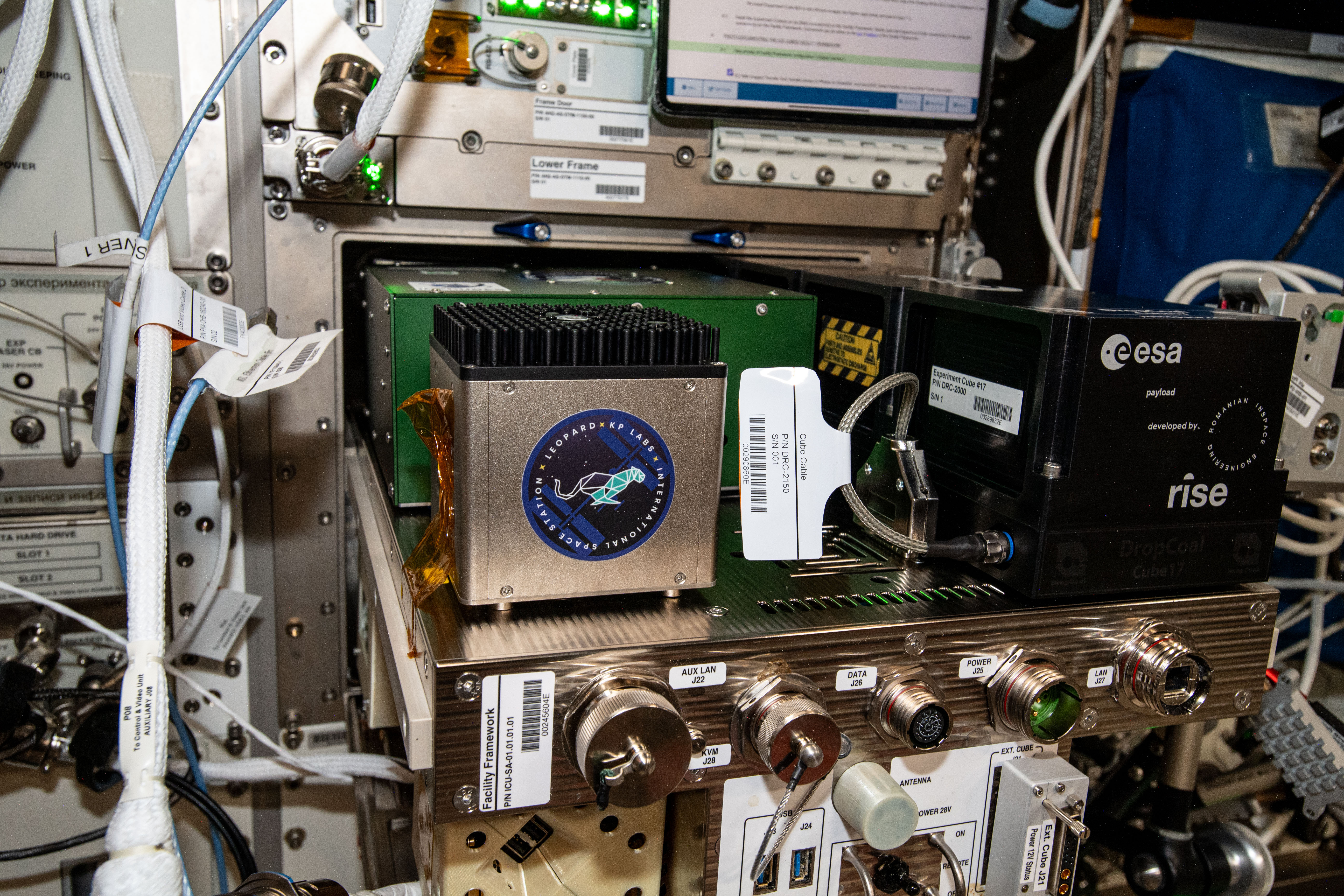
A Polish-designed onboard computer, LeopardISS, has been successfully tested aboard the International Space Station, where it was used to run autonomous navigation and Earth-observation algorithms directly in orbit, according to its developers at KP Labs.
The system, developed by the Gliwice-based company KP Labs, is a compact, screenless cube designed for operation in harsh space conditions. It connects directly to onboard sensors, including hyperspectral cameras, and processes data in orbit rather than sending raw information to Earth.
“The computer's architecture, its thermomechanical design, and the management software are our proprietary solutions”, Julia Marushchak of KP Labs told PAP.
During its mission, LeopardISS was used for two main experiments. The first focused on autonomous navigation algorithms for space applications, developed in collaboration with the Poznań University of Technology. The system tested 3D terrain mapping techniques that could one day help planetary rovers navigate without constant communication with Earth.
“These technologies are similar to those used in autonomous cars, but adapted to the specific limitations of space equipment”, said Dr Marek Kraft, who led the experiment.
Kraft said working with a system operating in orbit was unlike any conventional computing environment.
“From a programmer's point of view, controlling this computer was like working with a remote server in a server room. However, the knowledge that this +server+ is flying overhead at thousands of kilometres per hour is impressive”, he said.
The second experiment, conducted with QZ Solutions, tested artificial intelligence models designed to analyse satellite imagery for agricultural applications, including soil condition assessment.
The system identifies key parameters such as moisture and nutrient content, supporting precision agriculture techniques aimed at improving yields while reducing environmental impact.
According to Marushchak, processing data directly in orbit is essential due to the large size of modern satellite imagery and the limitations of space-to-Earth data transmission.
“A single image can ‘weigh’ many gigabytes. Sending such a data packet to Earth requires huge bandwidth, and bandwidth is limited. Secondly, in crisis management, such as fire or flood monitoring, every second counts. By processing data in orbit, we can immediately send the final result to the recipient, instead of sending raw material for processing on Earth”, she said.
The system can also filter data autonomously, for example by detecting cloud cover and discarding unusable images before transmission, reducing communication load.
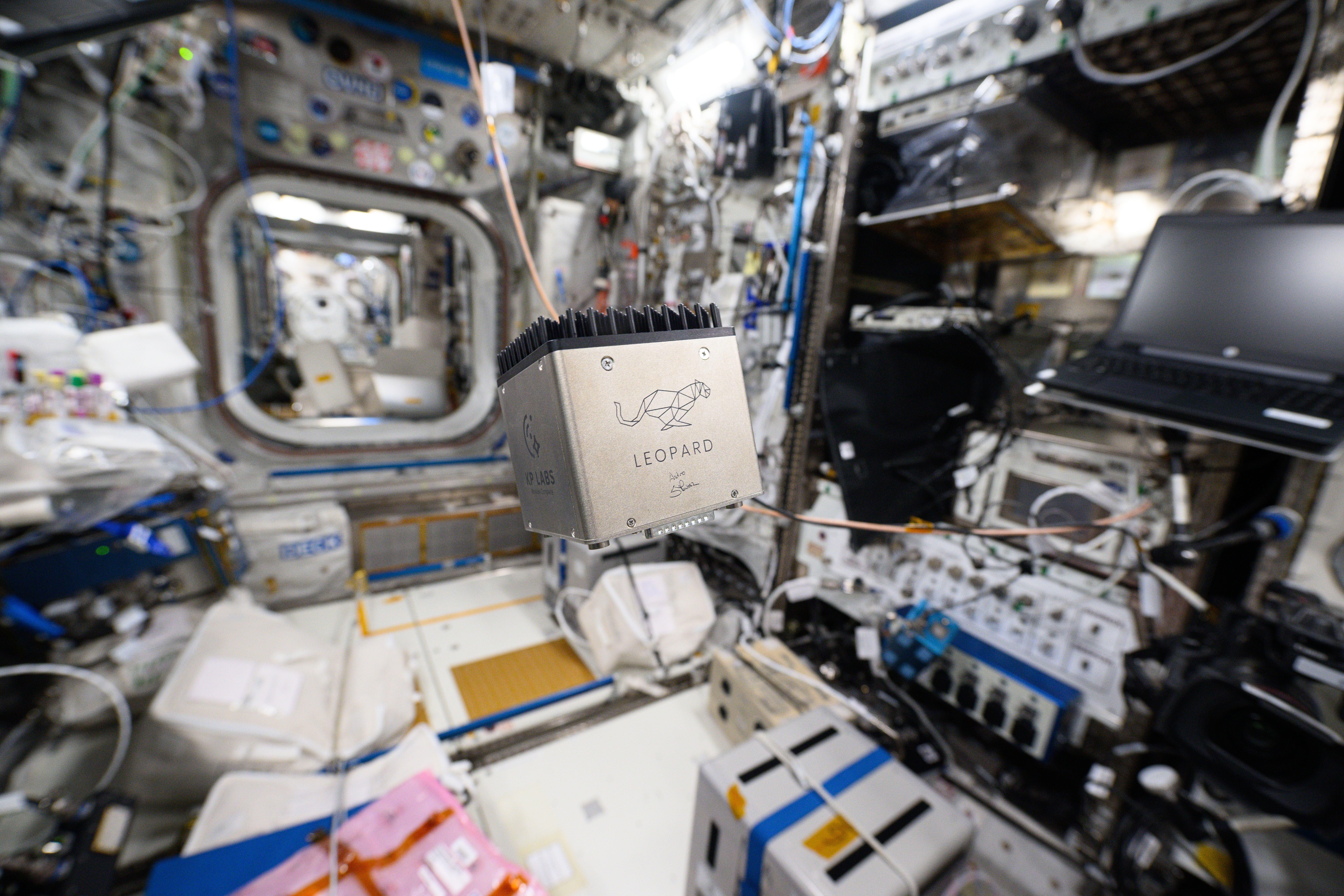
The LeopardISS platform can also be reprogrammed remotely while in orbit, allowing new algorithms to be uploaded during missions. KP Labs says this flexibility is key for future deep-space and lunar applications, where communication delays and bandwidth constraints are even greater.
Marushchak said the company is already preparing further missions in cooperation with the European Space Agency.
“We have proven once again that Polish technologies are very advanced and play a significant role in the development of the space sector in Europe and globally”, she said.
The system was tested during the IGNIS mission, the first Polish technological and scientific mission to the ISS, which launched on June 25, 2025. Over 20 days, ESA astronaut Sławosz Uznański-Wiśniewski conducted 13 experiments and led educational outreach activities for students in Poland.
Ludwika Tomala (PAP)
lt/ zan/
tr. RL