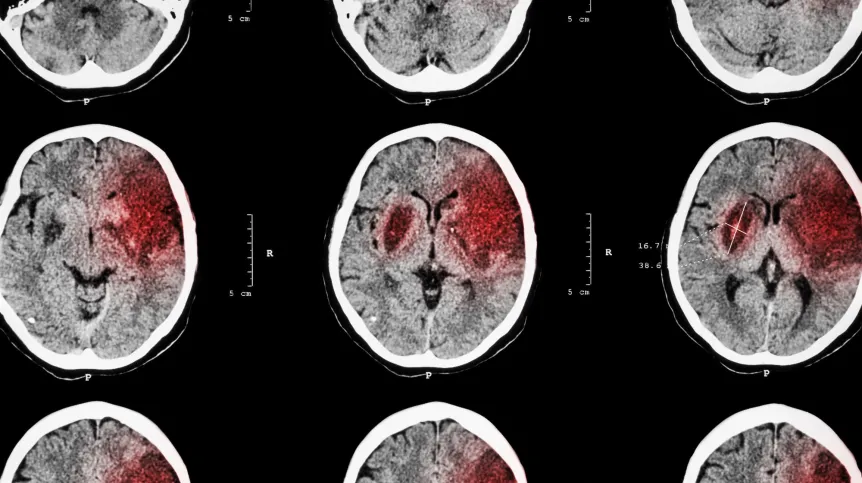
After a stroke, the brain activates its own repair system that helps stabilize damaged blood vessels, according to a new study co-authored by Marcin Tabaka, PhD, from the International Centre for Translational Eye Research (ICTER) at the Institute of Physical Chemistry of the Polish Academy of Sciences.
The research suggests that a small population of previously dormant cells begins migrating from the meninges toward injured areas of the cerebral cortex, where they help reinforce blood vessels and support recovery of the blood-brain barrier. The findings were published in the journal Cell Reports.
Stroke is a major global health problem. According to the World Health Organization, nearly 12 million strokes occur worldwide each year. In Poland, around 90,000 cases are recorded annually, a figure expected to rise as populations age. Stroke remains one of the leading causes of death and long-term disability, often resulting in paralysis, speech impairment and cognitive difficulties.
While treatment often focuses on rapidly restoring blood flow, researchers note that this is only the first stage of injury. Many patients experience neurological deterioration days after successful intervention, a process linked to secondary damage in the brain’s microcirculation and the breakdown of the blood-brain barrier.
The blood-brain barrier is a tightly regulated structure that normally protects the brain from toxins, immune cells and unwanted substances in the bloodstream. After a stroke, however, it becomes disrupted, allowing inflammatory factors to enter brain tissue, increasing swelling and worsening damage.
The new study focused on structures long considered passive: the arachnoid mater and pia mater, the inner layers of the meninges that surround the brain. Researchers found that these tissues may play an active role in post-stroke repair.
A small population of cells originating from the neural crest — an embryonic structure that gives rise to a wide range of tissues — was identified in the pia mater. These cells were previously thought to disappear or lose their function after development.
The study shows that after an ischaemic stroke, these cells can become reactivated and migrate toward injured brain regions. Once there, they accumulate near blood vessels and help stabilize them, supporting the restoration of the blood-brain barrier. In animal models, this process reduced vascular leakage and improved neurological outcomes.
“It is particularly interesting that the brain draws on very old, developmental mechanisms to cope with acute injury. It is not about regeneration, but about stabilization. And this stabilization may determine how a patient functions after a stroke,” said Marcin Tabaka, PhD, of ICTER.
Researchers also identified a chemical signalling pathway that guides the cells to damaged areas. Signals released by injured blood vessel cells act as a beacon, directing the repair cells to sites where the barrier is compromised. When this signal was blocked in experiments, fewer repair cells reached the injury site, the barrier remained more permeable and animals performed worse in neurological tests.
The study also highlighted the role of pleiotrophin (PTN), a protein produced by these cells that supports blood vessel stability and improves endothelial cell survival after oxygen deprivation. In laboratory and animal models, PTN was linked to reduced damage to the blood-brain barrier.
The ICTER team contributed bioinformatics analysis using single-nucleus RNA sequencing data to map cellular activity during the repair process.
Researchers caution that the findings are preclinical and not yet applicable to patient treatment. However, they say the work changes how stroke recovery is understood, shifting attention from restoring blood flow alone to the brain’s own delayed repair mechanisms.
“If we learn to understand and support these endogenous repair mechanisms, we may be able to improve patient outcomes, even when the window for conventional treatment has already closed,” Tabaka said.
PAP - Science in Poland
ekr/ agt/
tr. RL