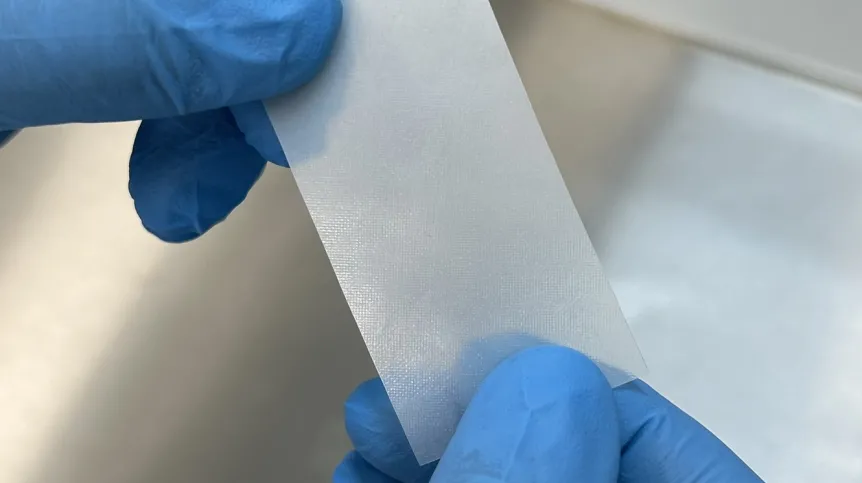
Polish scientists have begun analysing drug samples that spent 14 months aboard the International Space Station to determine whether medicines can survive the harsh radiation of future missions to the Moon and Mars.
The first samples, returned to Earth two weeks ago as part of Poland's IGNIS space mission, arrived last week at the Centre of Polymer and Carbon Materials of the Polish Academy of Sciences in Zabrze. Researchers have now begun the first stage of what will be more than 2,000 laboratory analyses.
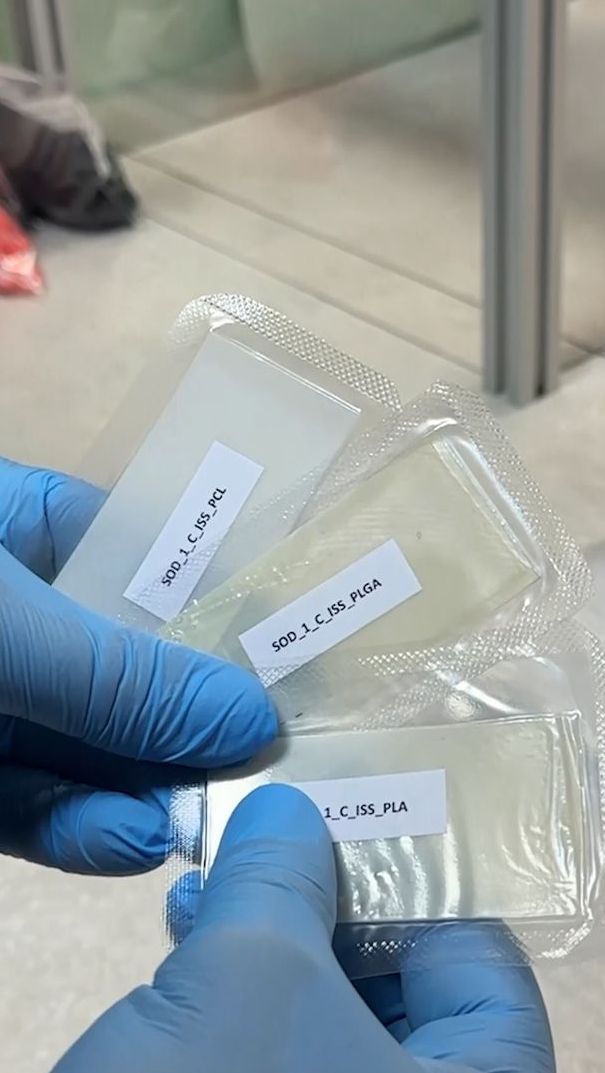
"Our next step is to investigate what happened to the materials we sent to the International Space Station," says Jakub Włodarczyk, PhD, from the Centre of Polymer and Carbon Materials of the Polish Academy of Sciences, the originator and leader of the experiment.
The study aims to determine whether drug delivery systems based on biodegradable polymer carriers can withstand prolonged exposure to cosmic radiation, making them suitable for long-duration space missions where medicines cannot be regularly replenished.
"The goal of our experiment is to assess whether drug delivery systems based on biodegradable polymer carriers could be used in future long-term space missions, primarily to the Moon or Mars," he explains.
The samples were stored aboard the ISS for 14 months under two different conditions. One batch was kept in cold storage at approximately 2°C, while the other was stored in the Columbus laboratory module at approximately 23°C, allowing researchers to assess whether lower temperatures further improve the durability of the materials.
Scientists are testing three types of samples: compressed pellets containing pure drug substances, polymer matrices alone, and polymer matrices with drugs dispersed at the molecular level. More complex structures, such as micro- and nanoparticles, were deliberately excluded to eliminate the influence of material geometry on the results.
"The samples look exactly as they did on the day they were sent. There are no visible changes, discolorations, or signs of decomposition," Włodarczyk says. However, he cautions that any changes at the molecular level will only be determined after laboratory analyses are completed.
The research will include chromatographic and spectrometric analyses, tests of drug release from the polymer carriers and assessments of whether the materials developed toxic properties after spending more than a year in orbit.
One of the study's key questions is whether embedding medicines in polymer matrices increases their resistance to cosmic radiation. According to Włodarczyk, drugs stored in space can undergo accelerated decomposition when exposed to radiation, while polymers—composed primarily of light elements, including hydrogen—may partially reduce its effects.
The findings will be compared with identical reference samples stored in the laboratory at the same temperatures since the experiment began. Preliminary results are expected by the end of September.
Researchers will also analyse the cumulative radiation doses received by the samples using detectors developed by a team from the Institute of Nuclear Physics of the Polish Academy of Sciences in Kraków. The detectors have already been returned from the ISS for analysis after recording radiation exposure over the 14-month mission.
The first batch of samples was launched aboard the SpaceX CRS-32 resupply mission and returned to Earth in the Cargo Dragon capsule during the CRS-34 mission. Two further sets of research materials remain aboard the ISS and are scheduled to return after two and three years of exposure, respectively. The experiment is expected to conclude after all samples have been analysed, at the turn of 2029.
PAP - Science in Poland, Julia Szymańska (PAP)
jms/ zan/
tr. RL