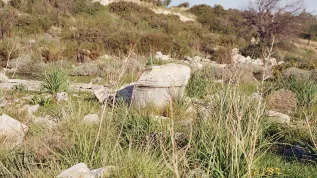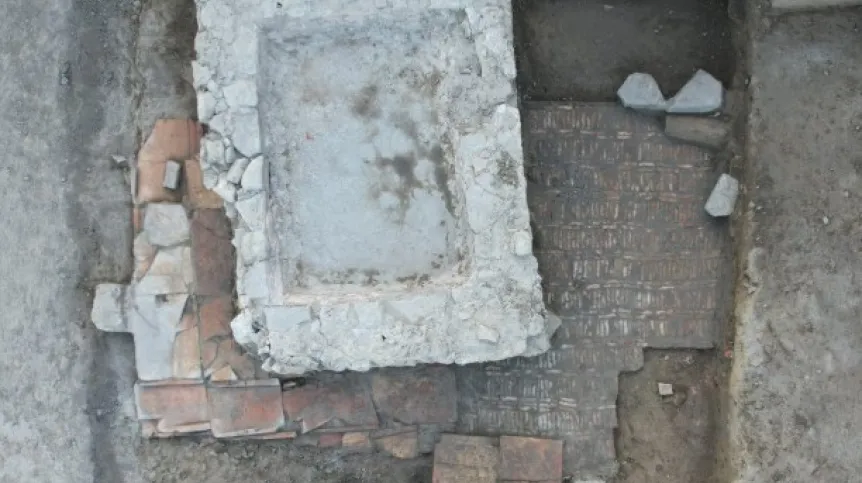
Polish archaeologists have uncovered what may be the lavish residence of a Roman legion commander at the ancient fortress of Novae in Bulgaria.
The monumental building covered more than 3,000 square metres and contained luxurious baths, painted plaster, elaborate floors, sculptures and inscribed altars.
Preliminary findings suggest it was the praetorium – the residence of the legate who commanded the entire legion.
Novae in northern Bulgaria was an important Roman and Byzantine military centre and the base of the First Italian Legion (legio I Italica), founded in the 1st century CE. A joint Polish-Bulgarian team has been excavating the site since 1960. Three Polish expeditions are currently working there, including a team from the Antiquity of Southeastern Europe Research Centre at the University of Warsaw.
The building originally covered about 4,500 square metres, making it the third-largest structure in the camp after the commandant's office and the hospital.
Inside, archaeologists found the remains of a large bathhouse, painted plaster, an intricate floor made of colourful bricks, unusual sculptures and inscribed altars. They also recovered fragments of bronze furniture, figurines and precious ceramics.
"We discovered 3,000 m2, but the building originally was 4.5 thousand m2. It was probably the praetorium, i.e. the residence of the legion's legate, the general who commanded the entire legion, Caesar's eye and ear, making sure the legion did not rebel," says Professor Piotr Dyczek, director of the Antiquity of Southeastern Europe Research Centre at the University of Warsaw.
"Few people had private baths in Roman fortresses. There were communal baths for the entire legion. In principle, only the legate could have his own large bathhouse. Although this will have to be confirmed, everything points to a residence, especially since the furnishings were luxurious. We found fragments of bronze furniture, various figurines and precious ceramics."
Archaeologists know the layouts of many Roman legionary camps, including those in Bulgaria, but modern cities have been built over large parts of many of them, making full excavations impossible.
"We have precious few huge residences that could be attributed to legates. In fact, none of them have been discovered in their entirety; they are always reconstructed from fragments. If our assumptions are confirmed, we will have the first fully discovered structure of this type," Dyczek says.
The excavation has also produced evidence of a much later chapter in Novae's history. For the first time, archaeologists uncovered the remains of late ancient buildings linked to the nomadic Avars, who appeared in Europe in the mid-6th century.
The discovery could shed new light on the migration of the Avars south of the Danube.
"Their settlements in the area of present-day Bulgaria are small, which means that they stayed in these areas for a short time. Avar houses are quite characteristic, partly sunk into the ground, each with stoves. We discovered one very large house, which was most likely the leader's house. Then a few small houses – 5 square metres each, all with fireplaces. On top of all this, we found a very rare Avar earring. In fact, this is the first discovery of this type in northern Bulgaria," says the archaeologist from the University of Warsaw.
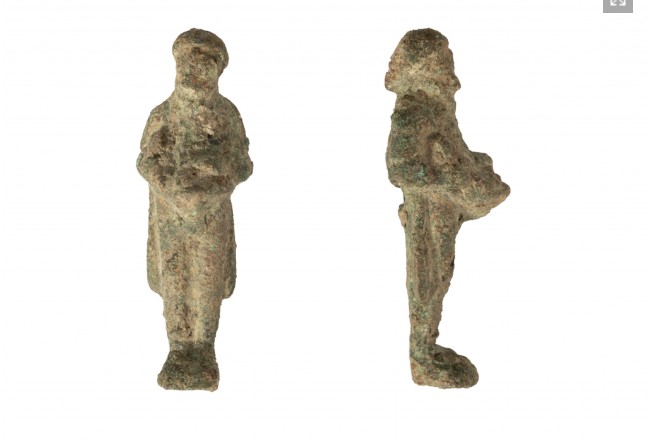
Among the other rare finds is a small bronze figurine of the Egyptian god Priapus. Only five similar artefacts are known so far from the Lower Danube area.
"In Novae we have the remains of Egyptian cults, which may indicate that at that time the legion included people who had contact with the Middle East," Dyczek says.
Two inscribed altars were also discovered, one of them almost intact with its full inscription. Archaeologists also found the head of the god Mithra, a fragment of a marble head from an official imperial portrait and an unusual architectural element shaped like a pine cone, rarely found on the Lower Danube.
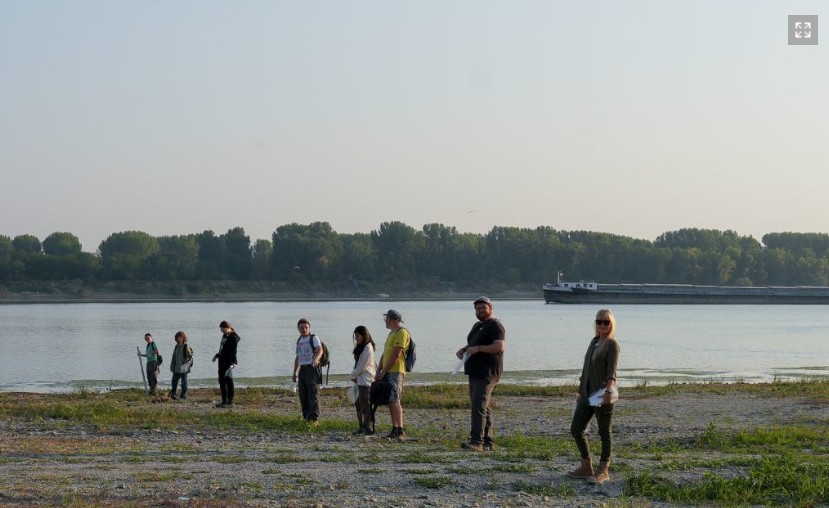
Falling water levels in the Danube have meanwhile allowed archaeologists to survey areas normally hidden underwater. They have been documenting ancient architectural elements, pottery fragments and roof tiles exposed by the low water.
The findings could help solve one of Novae's major mysteries: where its ancient port was located.
PAP - Science in Poland, Ewelina Krajczyńska-Wujec
ekr/ agt/