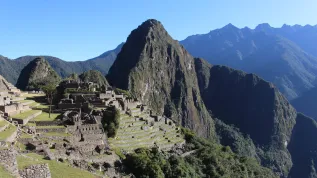
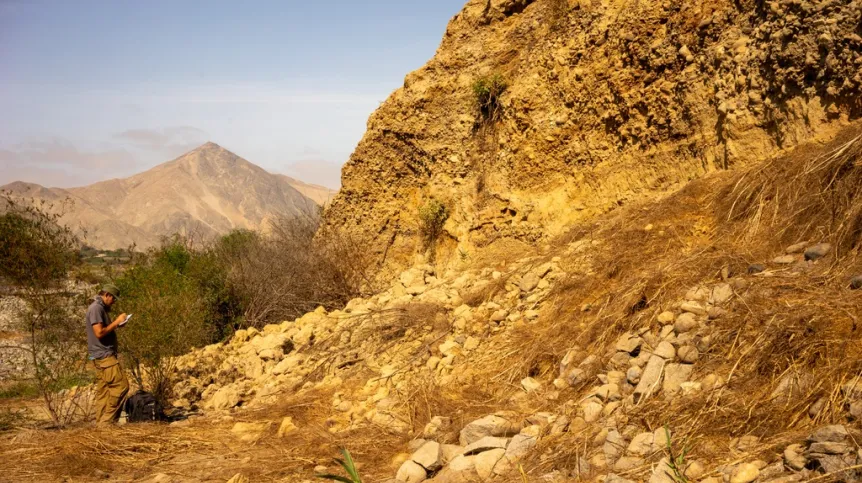
A tiny piece of metallurgical waste found in the hand of a young man buried in pre-Inca Peru suggests that metals used to make tools were transported hundreds of kilometres from present-day Bolivia.
The fragment was found in a burial at Castillo de Huarmey, a necropolis on Peru's northern coast that existed more than 1,300 years ago and was associated with the Wari culture.
Analysis suggests that the material most likely originated in the Pulacayo region of present-day Bolivia and reached Peru after preliminary processing or as a semi-finished metallurgical product.
The Wari culture formed an extensive network of administrative centres, roads and ceremonial sites and had a profound influence on later cultures in the region, including the Incas.
In 2012, an international team led by Polish archaeologists working at Castillo de Huarmey discovered the first intact royal tomb associated with the elites of the first South American empire. Subsequent excavations also uncovered burials of expert craftsmen.
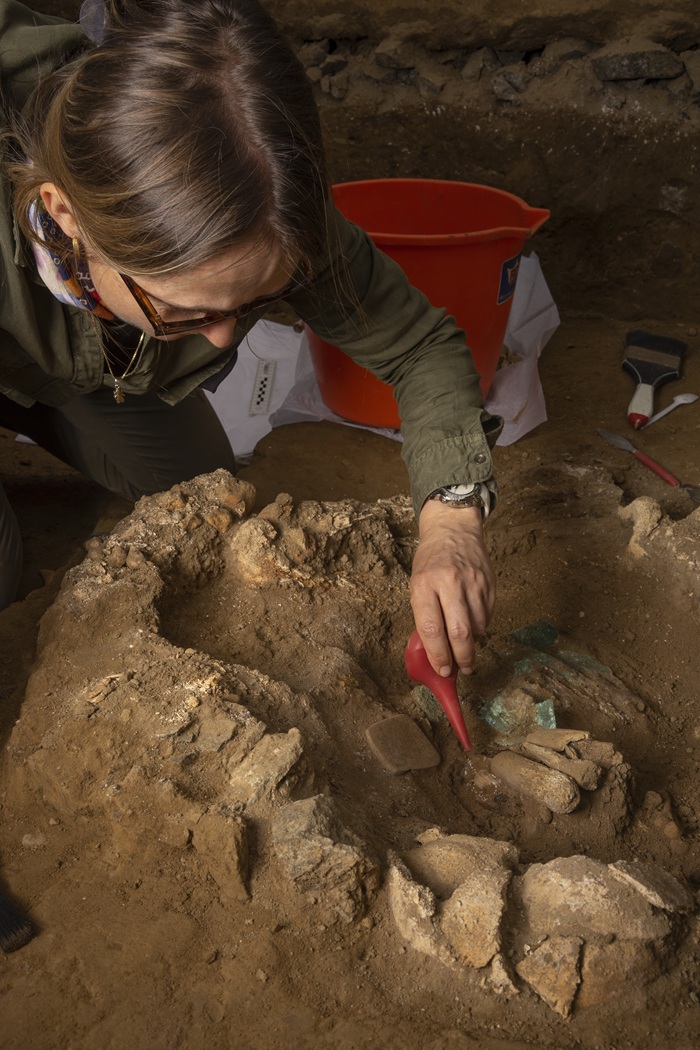
One of these was interpreted as a 'metallurgist's grave'. The tomb contained the remains of a man approximately 20 years old, along with a metal saw, an axe, knives and chisels – more than a dozen bronze objects in total.
A fragment of dark material resembling slag was also found in his hand. This inconspicuous piece was identified as speiss or matte, a byproduct of the complex processes involved in smelting metal ores.
Maciej Kałaska, PhD, from the Faculty of Geology at the University of Warsaw, explains that such material contains fragments of raw materials, newly formed mineral phases and finished metals.
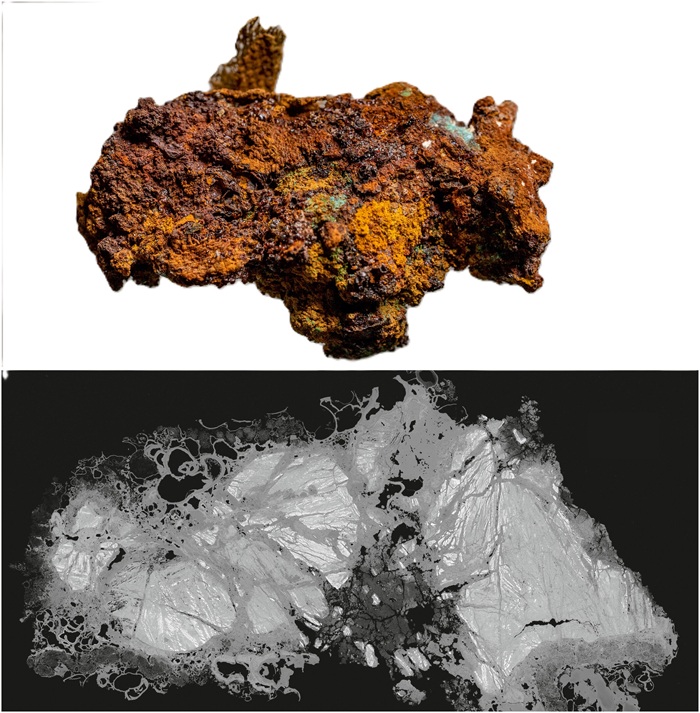
'By analysing all these ingredients, we can obtain information about the composition: ore, admixtures, metal alloy; we can also reconstruct the temperature, pressure, and chemical conditions in the furnace during the smelting processes. Based on this, we can determine the technological advancement of metallurgy in specific workshops, or even entire societies', he explains.
The fragment was studied by scientists from the University of Warsaw, the University of Silesia, the Institute of Geological Sciences of the Polish Academy of Sciences, the University of Florida and Juniata College. Their findings were published in the Journal of Archaeological Science: Reports.
The researchers used lead isotope analysis to determine, among other things, the likely origin of the ore used to produce the material found in the grave.
Lead occurs naturally in several stable isotopic varieties, and individual ore deposits have characteristic ratios of these isotopes. These can be considered geological fingerprints.
The scientists measured the isotopic composition of the fragment using mass spectrometry and compared the results with a database of ore, rock and metal artefacts from Peru, Bolivia, Chile, Argentina and other Andean countries.
Initial comparisons indicated several potential sources of the ore in southern Peru and Bolivia. However, after comparing the results with mineralogical and chemical data, the researchers concluded that the Pulacayo region in Bolivia was the most likely source.
Previous studies of other metal artefacts from Castillo de Huarmey had also pointed to the same area of origin.
'Pulacayo was one of the most important metal (primarily silver) mining sites in South America. During Inca and colonial times, it was the second-largest silver deposit in the world. However, in pre-Inca times, copper, in addition to silver, was also mined there. From its very inception until the early 20th century, it was a place that determined the economic strength of the local community and entire empires exploiting its resources', says Kałaska, first author of the publication in the Journal of Archaeological Science.
The metal was most likely transported through the Andes after preliminary processing. Semi-finished products and even finished objects destined for smelting may also have been imported to Peru.
They were transported by caravans of llamas, and some probably arrived by sea.
This was more practical than transporting heavy ores containing relatively little metal. Researchers also suggest that technological knowledge and craftsmen specialising in metallurgy may have arrived at Castillo de Huarmey along with the materials.
The fragment found in the metallurgist's hand could have been created during local metal smelting. It may have served as a benchmark for quality, a technological process, or a symbol of the individual's profession or status.
However, no smelting furnaces or significant accumulations of production waste have yet been discovered at the site to clearly confirm that metal was smelted locally.
Ewelina Krajczyńska-Wujec (PAP)
ekr/ agt/
tr. RL