In Krakow, due poorly designed urban lighting and pollution, you can see no more than 200 stars. In Bieszczady - even 7 thousand. Dr. Tomasz Ściężor from Cracow University of Technology spoke about light pollution in an interview with PAP.
PAP: At night in the city you do not see many stars. Why?
Dr. Tomasz Ściężor, Faculty of Environmental Engineering, Cracow University of Technology: There are two reasons. The first reason is lighting. It\'s not that there is too much light in the city, but the lights are misdirected. Instead of illuminating the streets, they light up the sky. The second reason is the emission of pollutants into the atmosphere. This is particularly noticeable in winter when buildings are heated by burning coal or coke. This is when the night sky is brightest, grey-brown. This is because the light is additionally dispersed by dust.
PAP: Does smog cause this?
TŚ: You could say that. We see the smog illuminated by misdirected light. When it comes to how the streets are lit - it is getting better. The situation is worst in the case of neighbourhood lighting. It is dominated by "ornamental" lights that do not serve their function well. Take, for example, a lamp in the shape of a sphere. Such lamp does not illuminate the ground well - under the lamp you can often see the shade of the luminaire, and all the light is directed at the windows of houses and the sky. The area under the lamp is darkest, and over it - brightest. This is not the proper lighting. Lamps should illuminate the sidewalk, the ground. Improper lighting of monuments also does a lot of harm.
PAP: Does light pollution bother anyone except astronomers?
TŚ: Everyone, starting with the animal world. According to our research, in Kraków during more than one-third moonless nights the ground surface is illuminated more than when the moon is full. It is as if we had many more "lunar" nights in a year than we should. This has a significant impact on animals. The situation is similar with humans. Our biological clock requires the night to be dark. The problem is the production of melatonin, so-called sleep hormone. Because of this hormone, we wake up refreshed. And melatonin is produced only in the dark. Excess of artificial light at night disturbs us and we do not rest well.
PAP: How did your team study light pollution?
TS: W performed measurements in about 20 places in Kraków, and control measurements in the Żywiec Beskids and Bieszczady; regardless of the weather, every night for one year we performed the night sky brightness measurements. We also measured the level of ground illumination by the night sky. We observed, for example, that the more clouded the sky is in the night, the brighter the night is. To the extent that you can even read a newspaper. And yet, in nature it is quite the opposite: in the Bieszczady Mountains, the more clouds there are in the night, the darker it is - clouds obscure the only natural source of light, the stars. Bieszczady is the only place we have found in Poland with the natural level of light pollution. The rest of Poland is polluted with light and a powerful glow from cities illuminates the sky.
PAP: What is the glow?
TŚ: The city glow or the island of light is the light coming from the city that scatters on the particles in the air and illuminates the sky. When we approach Kraków, such blanket of light is visible from a distance of 25-30 km from the centre. In Małopolska it is darkest near Miechów, where municipalities turn off street lighting in the night. In the commune of Jeleśnia in Zywiec Beskid, night sky protection programme is introduced and lamp housings are being replaced. The results are twofold - firstly, the sky is dark there, and secondly, the municipality saves money. Installing the correct housings allows to maintain street lighting at the previous level, and reduce the power of incandescent bulbs by 30 percent.
PAP: Are the differences in the brightness of the sky in different regions in Poland big?
TŚ: In the best positioned astronomical observatory in Poland on Suhor (Gorce National Park - PAP), the sky is 20-30 times brighter than in Bieszczady. But the sky in Kraków is up to 80 times brighter than in Bieszczady.
PAP: So how many stars can you see there?
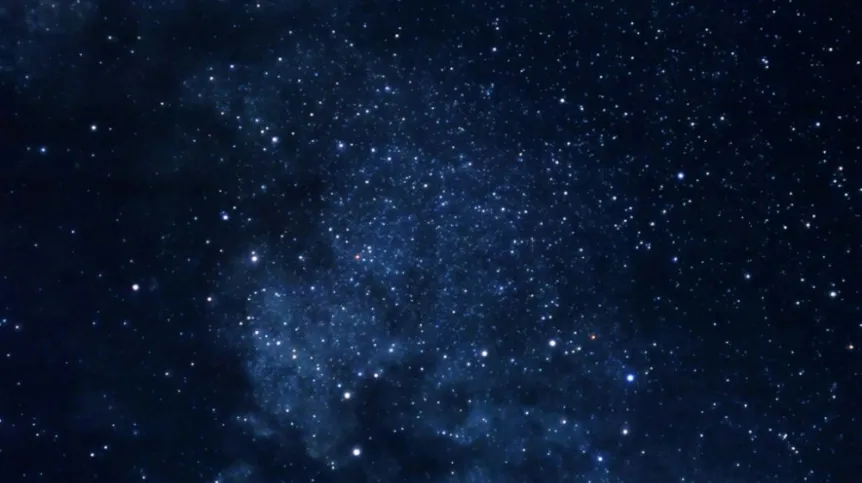
TŚ: When you look at the sky in the Bieszczady Mountains, you can see 6-7 thousand stars, and in Kraków in the best possible night conditions you can see about 200 stars. You cannot even see the Milky Way here. And in Bieszczady, the Milky Way looks like clouds in the sky.
PAP: How many stars could be seen in Kraków, if the lighting were well-designed?
TŚ: It is estimated that you could see 1-2 thousand stars.
PAP: This means it is worth fighting for dark sky?
TŚ: Of course. There are two sides to this coin. One is astronomical - the sky as a natural gift. We want to have clean water and clean forests, and we should want a clear sky. The other advantage is health - for good health and good sleep we need a dark environment. But it must be stressed: we do not fight with lighting. That\'s not the point. We just want it to be pointed in the right direction.
Interview by Ludwika Tomala (PAP)
PAP - Science and Scholarship in Poland
lt/ mrt/
tr. RL