Kraków universities commemorated the 76th anniversary of Sonderaktion Krakau on Friday. "For the first time the University Remembrance Day is a joint event of all of Kraków\'s universities" - said the rector of the Jagiellonian University Prof. Wojciech Nowak.
Earlier, universities in Krakow commemorated the anniversary of the arrest of academics by the Nazis on different days and in different forms.
The Jagiellonian University has always commemorated the event on November 6 - it was on this day in 1939 at the Jagiellonian University that the Nazis arrested 183 professors and lecturers of Kraków universities and deported them to concentration camps.
"At the Jagiellonian University on November 6 there has always been a large and important celebration - like in other universities of Kraków, only that those celebrations were organized on different days and in different forms. This year we decided to make this date a day of remembrance for the entire academic community of Kraków, and we succeeded" - said the rector.
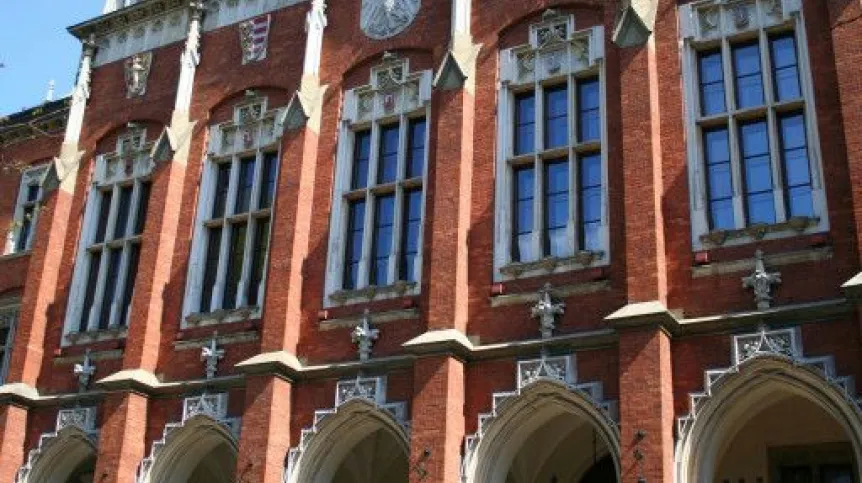
The main celebrations were held in the Collegium Novum. They included speeches, roll call memorial, screening of the film "Universita Restituta - MAY 19, 1945 - The first inauguration of the academic year after World War II" and laying flowers at the commemorative plaques, as well as from the Liberty Oak next to the building. Wreath was also laid by the commemorative plaque in the barracks of the Gen. Brig. Marian Zdrzałka 16th Airborne Battalion.
"For the university, for the Kraków community, the memory of Sonderaktion Krakau is a very important ceremony. This is the greatest commitment to these wonderful people who went through hell" - said the rector.
On Friday, all the rectors of Kraków universities, together with student representatives, laid flowers on the graves of deceased professors buried in cemeteries Rakowice and Salwator. At Rakowice cemetery, renovated tombstone of eminent botanist Prof. Bogumił Pawłowski was also unveiled.
76 years ago, November 6, Germans deceptively lured Kraków scholars to the Collegium Novum, arrested them and deported to concentration camps. Sonderaktion Krakau was one of the most dramatic actions against Polish intellectuals.
The then rector of the Jagiellonian University, Tadeusz Lehr-Spławiński, on demand of SS-Obersturmbannführer Bruno Müller, invited professors at noon to Nicolaus Copernicus room No. 66 in Collegium Novum (today Józef Szujski room No. 56). Scholars were supposed to hear the SS commander’s lecture about the Third Reich and National Socialism approach to the issues of science and higher education.
Instead of the announced lecture, in the Collegium Novum scientists were informed by Bruno Müller, who carried out this action, that the University of Kraków had always been a centre of anti-German sentiments, and for these reasons it would be closed and professors sent to camps.
In total, the Nazis arrested 183 professors and lecturers of Kraków universities, 155 from the Jagiellonian University, 22 from the Mining Academy and three from the Academy of Economics.
Those arrested were first detained in jail at Montelupich, then in the barracks of the 20th Infantry Regiment at Mazowiecka, and later they were transported to prison in Wrocław. In the meantime, as a result of the Polish Red Cross action, more than a dozen arrestees were released, including lawyer Fryderyk Zoll and Ukrainian professors. On November 27, the prisoners were transported to the Sachsenhausen concentration camp near Berlin.
As a result of the international upheaval, the Germans released some of the prisoners from the Sachsenhausen concentration camp - as historians point out, it was the only such situation in the history of German concentration camps.
On February 8, 1940, 102 prisoners who have completed 40 years of age left the camp. Before release they had to forgo the exercise of their profession in the future in writing. Nazis transported the other professors to other camps, including Dachau (on March 4, 1940), and later released some of them.
PAP - Nauka w Polsce
bko/ mhr/ zan/
tr. RL