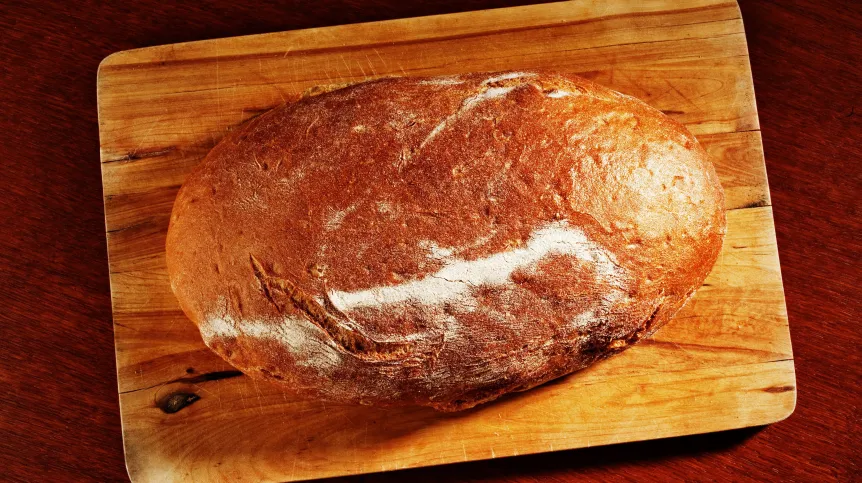
"Poland is a global leader in triticale cultivation. However, it is mainly used for animal feed and as raw material for biofuel production, and only to a small extent for nutritional purposes" - told PAP Dr. Anna Fraś of the Institute of Plant Breeding and Acclimatization - National Research Institute in Radzików.
The scientist has just received the National Research and Development Centre grant for development of a recipe for triticale-oat breads with high health value. "The primary ingredient of our bread will be triticale grain, which has very high nutritional and functional properties" - she explained.
Triticale and oats are rich sources of bioactive substances, such as dietary fibre. Therefore, bread baked from the triticale-oat mix will have much higher dietary fibre than, for example, wheat bread.
"Oat grain that we want to add to our bread has unique physiological and nutritional properties. It has high content of dietary fibre, and many other compounds such as polyphenols, vitamins, antioxidants, and antioxidants found only in oat - avenanthramides. It is also a rich source of unsaturated fatty acids" - described the scientist.
Triticale grains with the addition of oat flour or flakes will give a whole new type of bread with high pro-health properties and a very interesting taste. "Triticale bread has a different taste than wheat bread or rye bread. It\'s hard to describe the experience, but it is unusual and very tasty" - said Anna Fraś.
The problem is that triticale bread is much harder to bake. "Triticale in terms of baking value is a bit worse than wheat. It has a +worse+ gluten, which is very important in the process of baking" - the researcher explained.
Scientists have made attempts to bake triticale bread. But there is no technological method that would allow baking it on a larger scale.
For now, the bread will be prepared in the laboratory, but maybe in the future bakers will be able to bake it. "We want to develop the recipe for baking the bread and the composition of triticale-oat mixtures that would allow for baking it also in traditional bakeries, and not only in the lab" - said the author of the study.
"Triticale is a very cost effective, which is why I would like the products we create to be available to the average consumer. We want to ensure that our product is in the price range of products such as regular bread, while having higher quality" - she added.
According to the researcher, all kinds of culinary innovations, healthy breads and products are now very popular. A wide range of healthy bread baked with various types of cereals, mostly wheat and rye, is available on the market. "If triticale bread can be marketed, it could become a calling card of our country, due to our large production capacity of that cereal" - the scientist told PAP.
Anna Fraś project will begin in early 2014 and is scheduled for three years. Therefore, before you can try the triticale-oat bread, better go for whole grain bread. "It contains the entire fruit and seed covering, where most of the pro-health substances are found. During the traditional production of white flour these substances are removed, while in the production of whole grain flour they are preserved" - said Anna Fraś.
PAP - Science and Scholarship in Poland, Ewelina Krajczyńska
ekr/ mrt/ tot/
tr. RL