
-
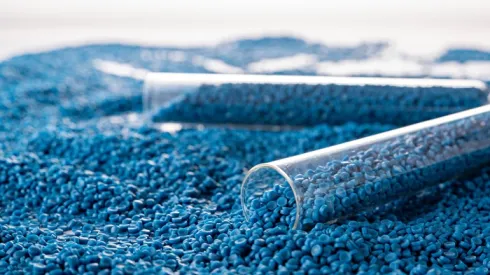
Polish scientists turn waste plastic into a heat-conducting material
Polish researchers have developed a recycled plastic composite that conducts heat more than four times better than the original material after being mixed with carbon nanoplatelets.
-

Black holes help calibrate gravitational wave detector
Two powerful black hole collisions have allowed scientists to work out how a miscalibrated LIGO detector in Hanford, Washington, was distorting gravitational-wave signals – and use the signals themselves to correct the data.
-

Could life exist in the sulphuric acid clouds of Venus?
New experiments suggest that some of the building blocks of life can survive – and even form complex structures – in concentrated sulphuric acid, raising new possibilities for organic chemistry in the clouds of Venus and on other planets.
-

Single photon reveals the secrets of a single molecule
Scientists have reconstructed the infrared spectrum of a single molecular ion by detecting the effect of a single absorbed photon on a neighbouring calcium ion.
-
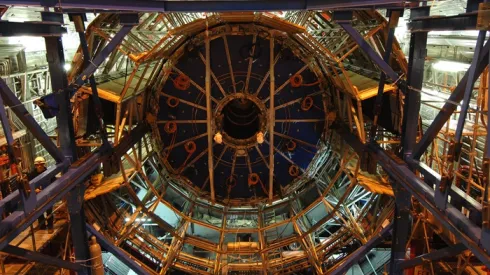
CERN finds particle that eluded physicists for years
The LHCb experiment at CERN has confirmed for the first time the existence of the Ξcc⁺ baryon, a particle made up of two heavy charm quarks and one down quark. Physicists had predicted its existence years ago, but an earlier possible detection was never confirmed. The new signal exceeded seven standard deviations.
-
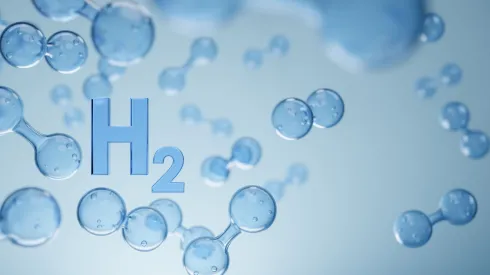
Glowing bacteria tested as tiny lamps for hydrogen production
Scientists have tested whether glowing bacteria could act as tiny lamps inside reactors producing hydrogen - but their light proved almost 43 times too weak.
-

New material glows orange when hit by sound, friction or impact
A new material developed by Polish physicists can be made to glow orange simply by striking, rubbing or hitting it with ultrasound. Physicists from the University of Gdańsk attribute the effect to the release of charges trapped in crystal defects.
-

Scientists create tiny molecular motors powered by ordinary daylight
Scientists have developed a new family of molecular machines that can convert the energy of ordinary sunlight into unidirectional rotational motion with exceptional efficiency.
-
Scientists measure temperatures 268C below zero using light as a thermometer
Scientists have measured temperatures as low as 4.9 kelvins — about 268 degrees Celsius below zero — by tracking the motion of hydrogen molecules with light instead of using a conventional thermometer.
Most Popular
-

Polish archaeologists uncover ‘lavish home of Roman legion commander’
-
Nightingale songs may tell mice when it’s safe to feed
-
Polish doctors call for national registry to improve hypothermia care
-
Does ‘time heals all wounds’? What grieving people really need
-
People who struggle with uncertainty choose like-minded friends