-
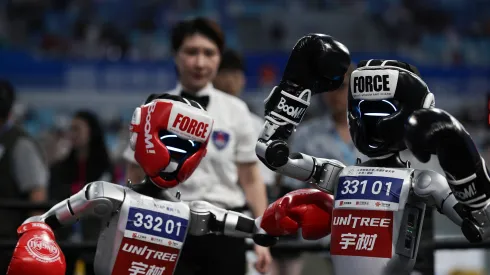
Polish team takes fourth place in global humanoid robot tournament
A seven-member Polish team has taken fourth place among 200 teams in the qualifying rounds of the URKL 2026 humanoid robot tournament, achieving the best result by a European team.
-
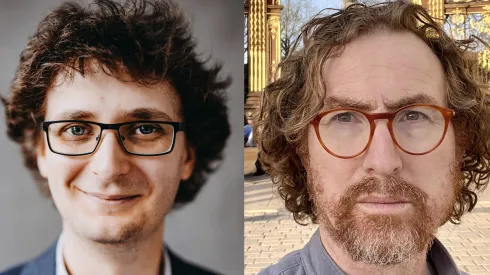
Polish and French scientists win award for groundbreaking ‘déjà vu’ research
A Polish and a French psychologist have won the 2026 Marie Skłodowska-Curie and Pierre Curie Polish-French Science Award for pioneering research that has transformed scientists' understanding of déjà vu and spontaneous memories.
-
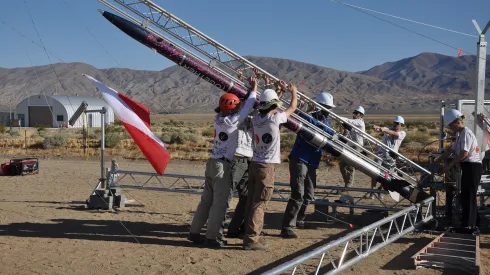
Polish student teams win awards at FAR-OUT rocketry competition in California
Student teams from Poland have won a slew of awards at an international rocket engineering competition in the United States, with a team from Wrocław University of Science and Technology among the event's top performers.
-
Polish mathematician receives 2026 Balakrishnan Award for Excellence in Scientific Research
A Polish mathematician has won the distinguished 2026 Balakrishnan Award for Excellence in Scientific Research from the Viterbi School of Engineering at the University of Southern California
-

Groundbreaking cell-based glioma therapy research wins prestigious Pfizer award
A scientific publication on a cell-based glioma therapy developed with support from Polish National Centre for Research and Development and European Funds has won the 2026 Pfizer Research Foundation Prize in oncology, highlighting its potential as a new class of cancer treatment.
-

Polish innovators win James Dyson Award 2025 for ‘life-saving’ water monitoring technology
A team of engineers from Warsaw has won the 2025 James Dyson Award in the “Sustainability” category, a global recognition for young inventors tackling real-world problems.
-
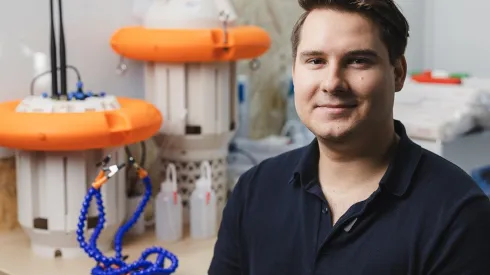
Polish students in James Dyson Award final with life-saving wristband and AI water monitor inventions
Two Polish inventions are among the Top 20 global finalists in this year’s James Dyson Award. Both inventions, a smart medical wristband that can save lives and an AI-powered water monitoring system, will compete for the competition’s international grand prize.
-

Polish scientists wins Ig Nobel Prize for study on intelligence and narcissism
Professor Marcin Zajenkowski from the University of Warsaw has received the Ig Nobel Prize in Psychology for research showing that praising someone for their intelligence can temporarily increase narcissism.
-

Polish physicist honoured with prestigious Japanese award
Professor Tomasz Dietl, a leading physicist with the Institute of Physics of the Polish Academy of Sciences, has been awarded the prestigious Tohoku University International Award – Special Award.
Most Popular
-

Polish and US scientists find way to halt deadly cell breakdown without harming healthy cells
-
Spreading conspiracy theories ‘builds inter-group hatred’
-
Procrastination is best combated with positive reinforcement, Polish research shows
-
Polish scientists calculate how to send icy worlds crashing into Mars to thicken its atmosphere
-
‘Vampire’ grave mystery deepens as 17th-century woman ‘may have been an outsider’
Recommended
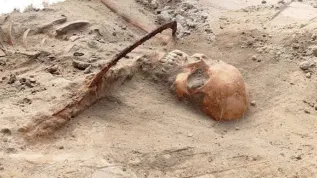
‘Vampire’ grave mystery deepens as 17th-century woman ‘may have been an outsider’
A 17th-century woman buried with a sickle around her neck and a padlock on her toe may have come from outside the local community, while a mysterious copper object placed in her mouth suggests locals took further measures to protect themselves from her after death, new research shows.