-
‘Masters of our own fate’: ICEYE chief urges Europe to build shared satellites to boost security
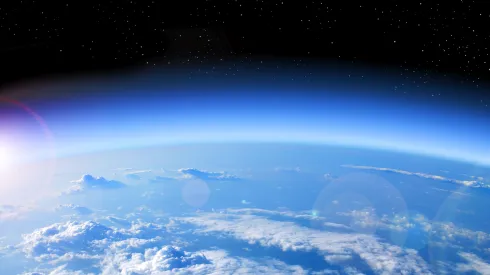
Europe should develop shared satellite capabilities to strengthen its security and reduce its technological dependence on non-EU partners, ICEYE CEO and co-founder Rafał Modrzewski has told the Polish Press Agency (PAP).
-
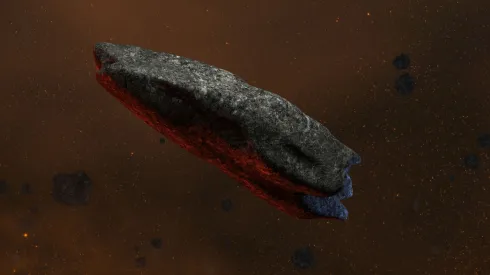
Alien comet reveals secrets of distant star system
A visitor from another star system has given astronomers a rare glimpse of material formed far beyond our Solar System.
-
Polish engineers building the brains of Europe’s new defence satellite system
A Polish team is developing a key software component of a European system that will give EU member states independent access to satellite data for defence purposes.
-
Polish scientist joins Roman telescope’s search for thousands of new worlds
A Polish astronomer is helping the newly launched Nancy Grace Roman Space Telescope hunt for thousands of new worlds, including around 1,500 exoplanets that could shed light on how common Earth-like planets are.
-
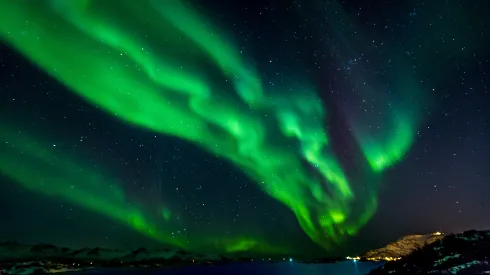
Cosmic pile-up drives strongest geomagnetic storm in two decades
The strongest geomagnetic storm in two decades was not caused by a single solar eruption. Instead, ten clouds of superheated plasma caught up with one another, merged and compressed, creating a cosmic pile-up that made the storm particularly difficult to predict.
-
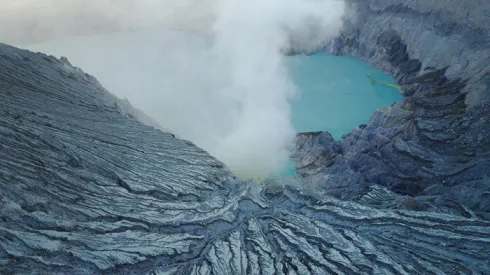
Could life exist in the sulphuric acid clouds of Venus?
New experiments suggest that some of the building blocks of life can survive – and even form complex structures – in concentrated sulphuric acid, raising new possibilities for organic chemistry in the clouds of Venus and on other planets.
-
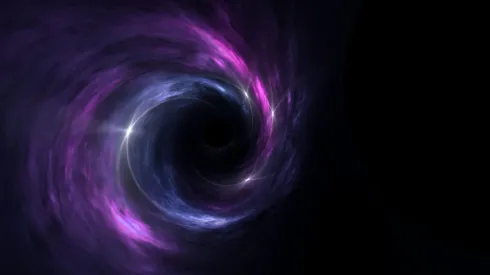
Black hole may spin rapidly, slowly or not at all, study finds
The black hole in the Cygnus X-1 system could be spinning almost as fast as physically possible, or barely spinning at all. A team including scientists from the Nicolaus Copernicus Astronomical Center of the Polish Academy of Sciences and the University of Lodz has shown that the answer depends on how the X-ray radiation from the system is modelled.
-
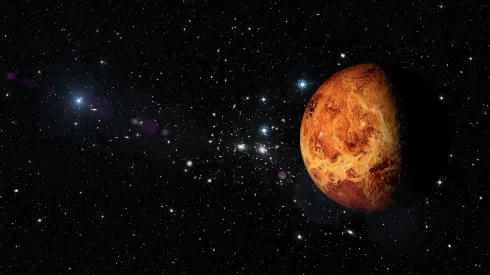
Clouds of Venus hide something that strongly absorbs light
Venus appears pale yellow in visible light, but looks dramatically different in ultraviolet, where dark and light bands are visible across the planet’s clouds. Scientists have now developed a model that narrows down what the mysterious substance responsible for this strong ultraviolet absorption could be, according to the Institute for Basic Science (IBS) in South Korea.
-

‘6,000 planets found but where is everybody?’ asks Polish astronomer who discovered the first extrasolar planet
The discovery of thousands of planets beyond our Solar System has brought humanity closer than ever to answering one of its oldest questions: are we alone in the Universe?
Most Popular
-

Polish archaeologists uncover ‘lavish home of Roman legion commander’
-
Nightingale songs may tell mice when it’s safe to feed
-
Polish doctors call for national registry to improve hypothermia care
-
People who struggle with uncertainty choose like-minded friends
-
Brain model reveals how neural chaos is kept under control