
Black hole may spin rapidly, slowly or not at all, study finds
The black hole in the Cygnus X-1 system could be spinning almost as fast as physically possible, or barely spinning at all. A team including scientists from the Nicolaus Copernicus Astronomical Center of the Polish Academy of Sciences and the University of Lodz has shown that the answer depends on how the X-ray radiation from the system is modelled.
-
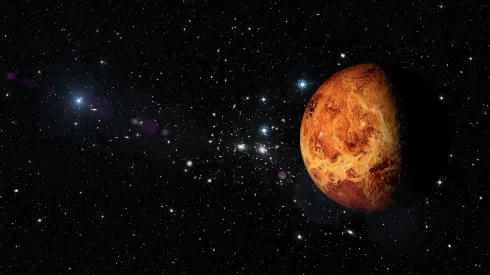
Clouds of Venus hide something that strongly absorbs light
Venus appears pale yellow in visible light, but looks dramatically different in ultraviolet, where dark and light bands are visible across the planet’s clouds. Scientists have now developed a model that narrows down what the mysterious substance responsible for this strong ultraviolet absorption could be, according to the Institute for Basic Science (IBS) in South Korea.
-

‘6,000 planets found but where is everybody?’ asks Polish astronomer who discovered the first extrasolar planet
The discovery of thousands of planets beyond our Solar System has brought humanity closer than ever to answering one of its oldest questions: are we alone in the Universe?
-
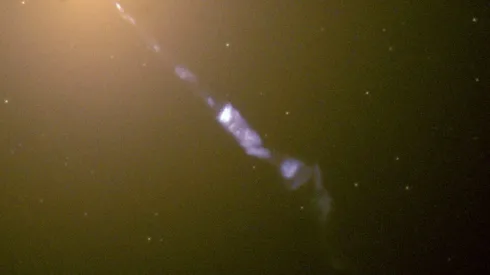
The Astronomer’s Guide to the Galaxy: 20 years of observations reveal blazar’s secrets
A 20-year study of one of the best-known blazars has revealed long-term behaviour that cannot be explained by the standard models used to describe how these extreme cosmic objects produce radiation.
-

Polish scientists calculate how to send icy worlds crashing into Mars to thicken its atmosphere
Mars’ extremely thin atmosphere could theoretically be thickened by sending icy objects from the outer Solar System crashing into the planet, bringing with them water, gases and ammonia, according to calculations by scientists from the Space Research Centre of the Polish Academy of Sciences.
-
Six new asteroids named after Polish researchers
Six Polish scientists and an Argentine planetary researcher working in Poland have been honoured with asteroids named after them, in recognition of their work in astronomy, planetary science and geology.
-
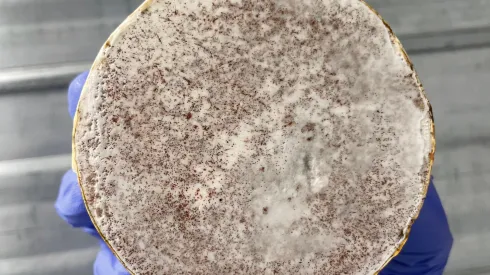
Fungi could help build habitats on the Moon and Mars
Living organisms, including fungi, could become part of space habitats built on Mars and the Moon in the future. They could help make use of local resources while also becoming part of life-support systems, according to architect Monika Brandić Lipińska, PhD, from the University of Innsbruck.
-
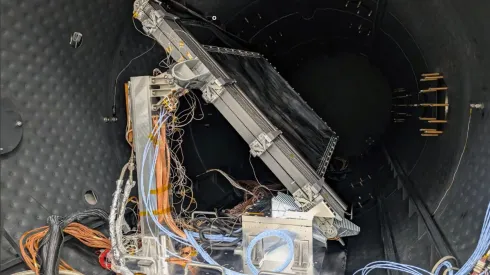
Polish-built ramps pass crucial tests for Rosalind Franklin Mars rover
Polish-built ramps that will carry the Rosalind Franklin rover from its lander onto the surface of Mars have passed a series of extreme tests designed to ensure they can operate after the spacecraft reaches the Red Planet.
-

Poland commits €656m to EU satellite network for secure communications
Poland has committed €656 million to the European Union's IRIS² satellite constellation, securing a major role in the bloc's strategic satellite communications system.
-

Poland to build first spacecraft for satellite servicing missions
Poland is joining the race to develop spacecraft that can repair, refuel and protect satellites in orbit, with the country preparing to build its first unmanned servicing vehicle.
Most Popular
-

Higher level of bread processing increases risk of inflammatory bowel disease
-
Black hole may spin rapidly, slowly or not at all, study finds
-
Scientists from Szczecin discover new crustacean species off Norwegian coast
-
Poland among world’s top hydrogen producers, expert says
-
Confronting facts rarely changes our minds – algorithms and the human brain may be to blame
Recommended

Poland among world’s top hydrogen producers, expert says
Poland is one of the world’s top hydrogen producers, while Polish researchers are developing technologies that could use the gas to store renewable energy and produce synthetic fuels, according to Professor Jakub Kupecki, head of the National Centre for Nuclear Research (NCBJ).