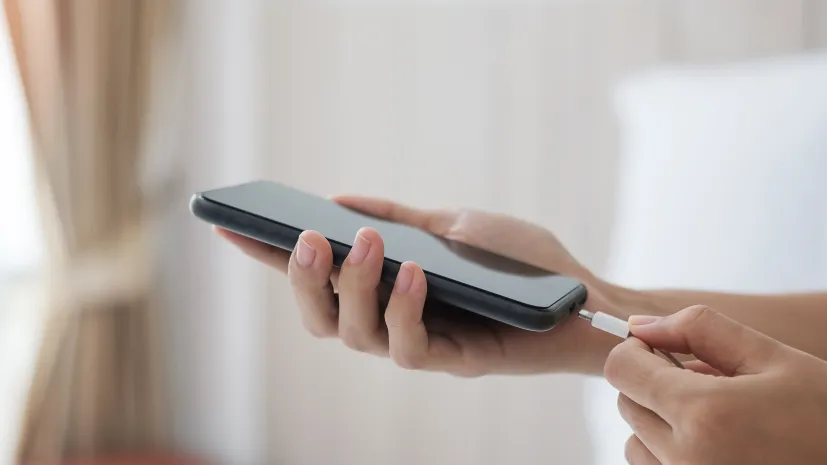
Why charging your phone to 100% can damage its battery
Charging a battery to its full capacity can accelerate wear by damaging the material inside it, research by physical chemists in Poland has found. The study helps explain why limiting a phone’s charge to 80% can help preserve battery health, although it does not establish a universal safe charging limit.
-
Scientists find microscope beams can change chemical reactions
A microscope designed to watch a chemical reaction can actually change what happens inside the sample, Polish researchers have shown.
-
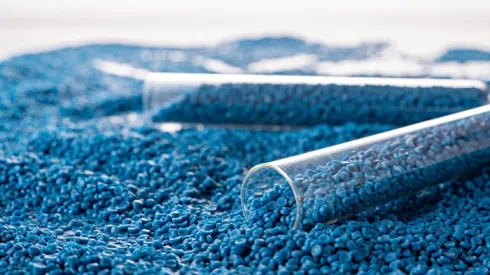
Polish scientists turn waste plastic into a heat-conducting material
Polish researchers have developed a recycled plastic composite that conducts heat more than four times better than the original material after being mixed with carbon nanoplatelets.
-

Black holes help calibrate gravitational wave detector
Two powerful black hole collisions have allowed scientists to work out how a miscalibrated LIGO detector in Hanford, Washington, was distorting gravitational-wave signals – and use the signals themselves to correct the data.
-

Could life exist in the sulphuric acid clouds of Venus?
New experiments suggest that some of the building blocks of life can survive – and even form complex structures – in concentrated sulphuric acid, raising new possibilities for organic chemistry in the clouds of Venus and on other planets.
-

Single photon reveals the secrets of a single molecule
Scientists have reconstructed the infrared spectrum of a single molecular ion by detecting the effect of a single absorbed photon on a neighbouring calcium ion.
-

CERN finds particle that eluded physicists for years
The LHCb experiment at CERN has confirmed for the first time the existence of the Ξcc⁺ baryon, a particle made up of two heavy charm quarks and one down quark. Physicists had predicted its existence years ago, but an earlier possible detection was never confirmed. The new signal exceeded seven standard deviations.
-
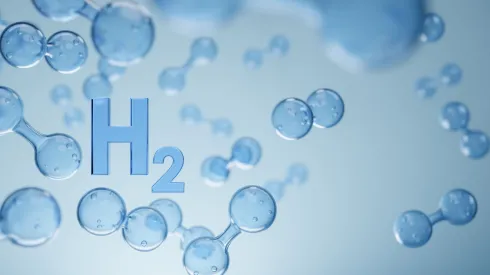
Glowing bacteria tested as tiny lamps for hydrogen production
Scientists have tested whether glowing bacteria could act as tiny lamps inside reactors producing hydrogen - but their light proved almost 43 times too weak.
-

New material glows orange when hit by sound, friction or impact
A new material developed by Polish physicists can be made to glow orange simply by striking, rubbing or hitting it with ultrasound. Physicists from the University of Gdańsk attribute the effect to the release of charges trapped in crystal defects.
-

Scientists create tiny molecular motors powered by ordinary daylight
Scientists have developed a new family of molecular machines that can convert the energy of ordinary sunlight into unidirectional rotational motion with exceptional efficiency.
Most Popular
-
How the brain’s ‘brakes’ help us learn and form memories
-
Iran’s spider-tailed viper has a tail unlike any other, study finds
-
Mental disorders account for the greatest loss of years lived in full health
-
Why charging your phone to 100% can damage its battery
-
Polish physicists develop sensor that remembers light
Recommended

Iran’s spider-tailed viper has a tail unlike any other, study finds
A horned viper found in Iran lures birds with a bizarre tail tip resembling a spider. Now, scientists have used 3D imaging to investigate the snake's anatomy, finding that its bizarre lure is formed by elongated scales rather than unusually shaped vertebrae.