
-

Polish scientist joins Roman telescope’s search for thousands of new worlds
A Polish astronomer is helping the newly launched Nancy Grace Roman Space Telescope hunt for thousands of new worlds, including around 1,500 exoplanets that could shed light on how common Earth-like planets are.
-
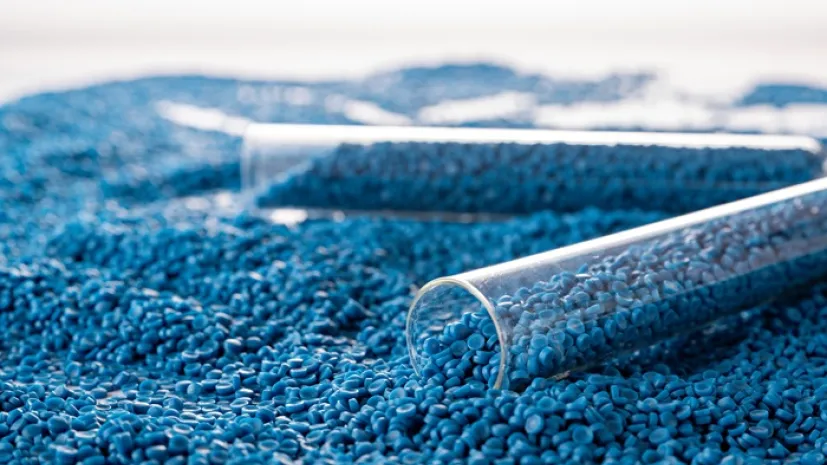
Polish scientists turn waste plastic into a heat-conducting material
Polish researchers have developed a recycled plastic composite that conducts heat more than four times better than the original material after being mixed with carbon nanoplatelets.
-

Polish-Swiss team develops personalised nutrition system for premature babies
Polish and Swiss researchers are developing a system that could allow premature babies to receive human milk fortified to meet their individual nutritional needs.
-

City coots are losing their fear of people
Coots that have lived in Warsaw for generations have become far less afraid of people and unfamiliar objects than birds living outside cities, with some refusing to leave their nests even when touched by hand.
-

How Europeans divide along social and political lines revealed
People’s political and social identities do not divide neatly into two opposing camps but instead form a more complex mosaic, according to a study of more than 5,000 people in five European countries, including Poland.
-

Scientists turn thunder into a tool for seeing underground
Sound waves that create thunder during a storm can cause not only window panes to vibrate, but also the ground. A study involving a Polish researcher has shown that the very weak seismic tremors created in this way can be used to image the structure of the subsurface to a depth of 100 metres.
-

From hedgehogs to lynx: Polish roads kill animals from 55% of the country’s wildlife species
More than half of Poland’s terrestrial vertebrate species have been recorded among animals killed on the country’s roads, including common hedgehogs, blackbirds and grass snakes as well as rare and endangered species such as the European pond turtle, lynx and Aesculapian snake, according to research published in Scientific Reports.
-

Poland among world’s top hydrogen producers, expert says
Poland is one of the world’s top hydrogen producers, while Polish researchers are developing technologies that could use the gas to store renewable energy and produce synthetic fuels, according to Professor Jakub Kupecki, head of the National Centre for Nuclear Research (NCBJ).
-

Sleep therapy boosts Alzheimer’s patients’ cognition after just one month
A device that stimulates the vagus nerve during sleep has been shown to improve cognitive performance in Alzheimer’s patients after one month of treatment, according to research by scientists from Łódź published in the Journal of Alzheimer’s Disease.
Most Popular
-

Polish archaeologists uncover ‘lavish home of Roman legion commander’
-
Nightingale songs may tell mice when it’s safe to feed
-
Polish doctors call for national registry to improve hypothermia care
-
People who struggle with uncertainty choose like-minded friends
-
Brain model reveals how neural chaos is kept under control
















