• Adobe Stock

    Polish scientists supercharge probiotic to fight Salmonella

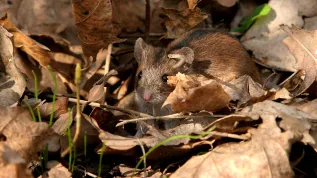
    Polish scientists have modified a probiotic bacterium so that it more effectively protects against Salmonella infection. In experiments on mice, they showed that the modification improved the probiotic’s ability to compete with the pathogen for space in the intestine while also strengthening the immune response.

  • Kraków, 16.08.2026. Radio astronomer and co-discoverer of the first extrasolar planets, Professor Aleksander Wolszczan, during an interview with the Polish Press Agency in Kraków..  PAP/Łukasz Gągulski

    ‘6,000 planets found but where is everybody?’ asks Polish astronomer who discovered the first extrasolar planet

  • Burial of a woman buried with a sickle and padlock from the 17th-century cemetery in Pień, Source: Pień Project/TSE Evolution

    ‘Vampire’ grave mystery deepens as 17th-century woman ‘may have been an outsider’

  • Adobe Stock

    Spreading conspiracy theories ‘builds inter-group hatred’

  • The elliptical galaxy M87 emitting a jet, in an image from the Hubble telescope (due to the large angle between the jet and the line of sight, the centre is not classified as a blazar!) Wikipedia, public domain

    The Astronomer’s Guide to the Galaxy: 20 years of observations reveal blazar’s secrets

  • Adobe Stock

    Gut bacteria produce proteins linked to Parkinson’s and Alzheimer’s, study finds

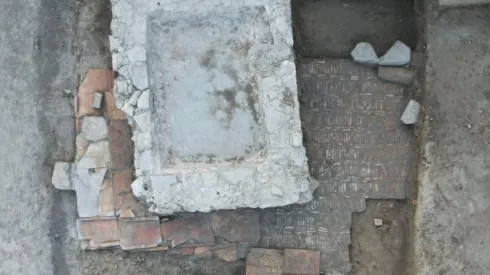
  • Tauchira Gate in Ptolemais in 2006, view from the west. Credit: Miron Bogacki. Source: European Journal of Archaeology

    Ancient marks crack the code of a 2,000-year-old building site

  • Adobe Stock

    Watching people touch can trigger physical reactions in our own bodies, study finds

  • Adobe Stock

    The 18 volcano myths that could put lives at risk

  • Aquatic vegetation in Lake Gieret in Giby. PAP/Michał Zieliński

    Aquatic plant extracts may prevent cancer development

Tauchira Gate in Ptolemais in 2006, view from the west. Credit: Miron Bogacki. Source: European Journal of Archaeology

Ancient marks crack the code of a 2,000-year-old building site

More than 620 mysterious marks carved into the limestone blocks of an ancient Libyan gate have revealed how stonemasons organised their work more than 2,000 years ago.

  • Adobe Stock

    Watching people touch can trigger physical reactions in our own bodies, study finds

  • Adobe Stock

    Polish scientists supercharge probiotic to fight Salmonella

  • Adobe Stock

    Watching people touch can trigger physical reactions in our own bodies, study finds

  • Spreading conspiracy theories ‘builds inter-group hatred’

  • Procrastination is best combated with positive reinforcement, Polish research shows

  • To Be Like Maria Skłodowska-Curie. A Virtual Experiment Challenges Stereotypes About Women in STEM

  • Hard worker or workaholic? Psychologists reveal the difference

  • Adobe Stock

    CERN finds particle that eluded physicists for years

  • Glowing bacteria tested as tiny lamps for hydrogen production

  • New material glows orange when hit by sound, friction or impact

  • Scientists create tiny molecular motors powered by ordinary daylight

  • Scientists measure temperatures 268C below zero using light as a thermometer

  • Adobe Stock

    The 18 volcano myths that could put lives at risk

  • Rivers did the digging: New study rewrites how the Tatras took shape

  • Poland has warmed by more than 2°C since mid-20th century, institute data shows

  • Polish research team fails to reach Spitsbergen glacier due to lack of snow

  • Pollinator survival depends on soil quality, study finds

  • Kraków, 16.08.2026. Radio astronomer and co-discoverer of the first extrasolar planets, Professor Aleksander Wolszczan, during an interview with the Polish Press Agency in Kraków..  PAP/Łukasz Gągulski

    ‘6,000 planets found but where is everybody?’ asks Polish astronomer who discovered the first extrasolar planet

  • The Astronomer’s Guide to the Galaxy: 20 years of observations reveal blazar’s secrets

  • Polish scientists calculate how to send icy worlds crashing into Mars to thicken its atmosphere

  • Six new asteroids named after Polish researchers

  • Fungi could help build habitats on the Moon and Mars

  • Tauchira Gate in Ptolemais in 2006, view from the west. Credit: Miron Bogacki. Source: European Journal of Archaeology

    Ancient marks crack the code of a 2,000-year-old building site

  • Ancient metal waste reveals 2,000-year-old trade route across the Andes

  • ‘Vampire’ grave mystery deepens as 17th-century woman ‘may have been an outsider’

  • Teeth reveal what Wrocław residents ate 200 years ago

  • Ancient Egyptian rock art reveals two very different relationships between humans and animals

  • Adobe Stock

    Gut bacteria produce proteins linked to Parkinson’s and Alzheimer’s, study finds

  • Aquatic plant extracts may prevent cancer development

  • Polish scientists supercharge probiotic to fight Salmonella

  • New test could detect Parkinson’s before motor symptoms appear

  • Copying another smoker could make it harder to quit, study finds

  • Katarzyna Groborz, PhD, and Marcin Poręba, PhD. Photo from the Wrocław University of Science and Technology press release.

    Polish and US scientists find way to halt deadly cell breakdown without harming healthy cells

  • Polish and US scientists find way to halt deadly cell breakdown without harming healthy cells

  • Ancient iguana may have reached Europe by drifting on tree trunks after tsunami

  • Ancient iguana may have reached Europe by drifting on tree trunks after tsunami

  • Scientists discover vast hidden world of RNA viruses in cities worldwide

  • Adobe Stock

    We are not able to reliably identify texts generated by AI, says linguist

  • Polish team takes fourth place in global humanoid robot tournament

  • Polish researchers test safer way to remove old conservation layers from historic paintings

  • Polish startup develops drone system to spot hidden threats

  • Poland commits €656m to EU satellite network for secure communications

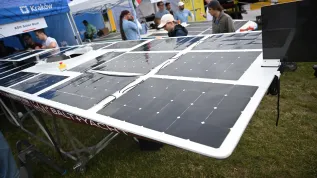
  • Kraków, 24.07.2026. Krakow Solar Boat Challenge 2026 on the Bagry Reservoir in Krakow. Credit: PAP/Art Service

    Kraków students power to victory in inaugural solar boat challenge

  • European scientists warn of growing pressure on academic freedom

  • Universities told they must lead fight against scientific ‘paper mills’

  • Reputable journals remain key to trust in science despite rise of AI, says expert

  • Poland looking to host European Space Agency centre

  • Szczecin, August 19, 2026. Adam Zieliński, PhD, Eng., at the West Pomeranian University of Technology in Szczecin, August 19, 2026. The American Association of State Highway and Transportation Officials (AASHTO) Committee – the organization that sets standards for the design and construction of highways, bridges, roads, and other transportation facilities in the United States – officially published a revised set of standards on July 31, 2026, implementing Zieliński's PST (Plastic-Sleeve Test / Polish Shrinkage Test) test method. PAP/Marcin Bielecki

    Polish invention for testing concrete shrinkage wins US approval

  • Krakow researchers develop alcohol-free, eco-friendly water-based perfumes

  • Szczecin/ Innovative paper developed in cooperation between scientists and industry

  • World's only capsule for imaging breast lesions tested in Kraków

  • Jagiellonian University scientists discover polymer with antifungal properties

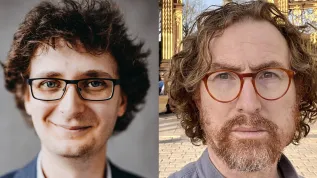
  • Krystian Barzykowski, PhD, a professor at the Jagiellonian University (L), photo by Agnieszka Fiejka, and Professor Chris Moulin (R), photo from private archive.

    Polish and French scientists win award for groundbreaking ‘déjà vu’ research

  • Polish mathematician receives 2026 Balakrishnan Award for Excellence in Scientific Research

  • Polish students in James Dyson Award final with life-saving wristband and AI water monitor inventions

  • Polish scientists wins Ig Nobel Prize for study on intelligence and narcissism

  • Polish physicist honoured with prestigious Japanese award

  • Piotr Sankowski. PAP/Rafał Guz 22.10.2025.

    Poland's Professor Piotr Sankowski joins UN global panel on AI

  • Henryk Arctowski - pioneer of Polish polar research

  • VP of the Polish Academy of Sciences appointed Member of the Council of the European Institute of Innovation & Technology

  • Wrocław professor is the highest-ranked Polish scientist in the field of medicine

  • Polish computer scientist announced as Chief Scientist at OpenAI